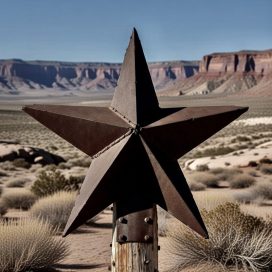
Fort Clark was one of the longest forts to be in service in Texas. It was founded in 1852 and not finally closed or abandoned until 1946. It was considered a favorable location due to having a plentiful water supply from the Las Moras River and its close proximity to Las Moras Mountain. It served two major purposes, to protect the area against Indian raids and to protect its portion of the military road from San Antonio to El Paso. Companies C and E of the the First United States Infantry were posted there. It was named for Major John B. Clark who died in 1847 during the Mexican-American War.
Tag: texas
The Dillinger Gang and Texas Connections
John Dillinger was a well known gangster who operated in the United States until his death in 1934. He had been born in Indianapolis, Indiana on June 22, 1903. Dillinger’s mother died when he was three years old and he was raised by his father and stepmother, with whom he is said to have had a difficult relationship. The family moved around somewhat and Dillinger dropped out of school. Around 1923, he joined the United States Navy. He was assigned to the U. S. S. Utah but only served a short while before deserting, after which he launched his criminal career. Not long afterward, Dillinger was arrested, tried and convicted for a 1924 robbery of a local grocery in his adopted home town of Mooresville, Indiana and was sentenced to the Indiana State Prison. There he was exposed to fellow convicts including a number who had been bank robbers. Upon his parole in the spring of 1933, he and several associates began to commit a series of bank robberies in Indiana and Ohio.
Black Seminoles of Texas
The account of the Black Seminoles in Texas begins in Florida. Slavery had been abolished in Spanish Florida since the late 1600s and the area became a refuge for freed as well as fugitive slaves. Though some were taken as slaves by the Native tribes that resided there, those of African descent are generally believed to have interacted peacefully with the native tribes, with some amount of intermarriage and more significantly, the adoption of the tribal ways and customs. The people known as Seminoles are sometimes referred to as being a conglomeration of a number of tribes living in the area, including the Creek Tribe, although the Creek Tribe is also usually referred to separately. Tribes included the Lower Creeks, Mikusukis and Apalachicola, among others and they are believed to have migrated there from the areas now represented by the states of Georgia and Alabama.
Dan Waggoner and His Descendants
Daniel Waggoner was born in 1828 in Tennessee to Solomon and Martha McGaugh Waggoner. Daniel was the second of the siblings to be born in Lincoln County, Tennessee before the family moved to Missouri where most of the other siblings were born. The family finally settled in Hopkins County, Texas. Daniel married Nancy Moore in 1851 in Hopkins County. The following year their only son William Thomas Waggoner was born. Nancy passed away in 1853. Five years later, Daniel married Sicily Ann Halsell, daughter of Electious and Elizabeth Jane Mayes Halsell. Sicily was from a large ranching family, also of Wise County. The couple had no children.
Continue reading Dan Waggoner and His DescendantsLaw Officers Killed By The Barrow Gang: Cal Campbell (Victim 9)
Constable Cal Campbell was the last lawman to be killed by the Barrow gang. The list of law officers who were victims of the gang is as follows:
Eugene Moore, Atoka, OK, 8/5/1932
Malcolm Davis, Dallas, TX 1/6/1933
Harry McGinnis, Joplin, MO 4/13/1933
Wes Harryman, Joplin, MO 4/13/1933
Henry D. Humphrey, Alma, AR 6/26/1933
Major Crowson, Huntsville, TX 1/16/1934
E. B. Wheeler, Grapevine, TX 4/1/1934
H. D. Murphy, Grapevine, TX 4/1/1934
Cal Campbell, Commerce, OK, 4/6/1934
Continue reading Law Officers Killed By The Barrow Gang: Cal Campbell (Victim 9)
 Texas History Notebook