Governor Dolph Briscoe and the Chicken Ranch

Dolph Briscoe, Jr. was the 41st governor of Texas.  He was born April 23, 1923 in Uvalde County, Texas to Leigh Adolphus (Dolph) and Georgia M. Garvey Briscoe.  His grandparents were Leigh Adolphus (the first of his Briscoe ancestors to be born in Texas) and Lucy A. Briscoe.  Going further back on the Briscoe side, his great grandfather was Robert Permenias Briscoe and his great grandfather was Andrew Briscoe, a signer of the Texas Declaration of Independence and a settler in the old Fort Bend area.

Continue reading Governor Dolph Briscoe and the Chicken Ranch
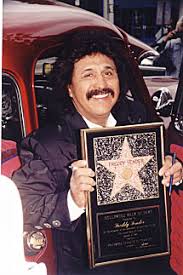
Freddy Fender

freddyfender

(Image credit: FreddyFender.com)

Freddy Fender was born Baldemar Garcia Huerta in San Benito, Cameron County, Texas on June 4, 1937.  His parents were Serapio and Margarita Garcia Huerta, who were migrant farm workers.  Huerta was the oldest of four children and was raised around music, including lively “conjunto,” a traditional style of music that includes a blend of Tejano and references to German polka, including the use of an accordion.  He performed as early as the age of ten on a Harlingen, Texas radio station.  He dropped out of high school and lied about his age to join the United States Marine Corps.  He served from 1954 to 1956.  Huerta married in 1957 as he began to perform as “El Be-Bop Kid” and other stage names, doing covers of popular American hits of artists like Elvis Presley but singing them in Spanish.  He and his wife Evangelina had five children.  They divorced and remarried at one point, but otherwise were married for about forty-five years.

Continue reading Freddy Fender

The Horrell Brothers

In the latter half of the 1870s in Lampasas County, Texas a feud developed between two families, the Horrells and the Higgins.  Prior to that, the Horrell brothers, Mart, Tom, Merritt, Ben and Sam, had come to the attention of state law enforcement officers.  In early 1873, during a short period when the Texas Rangers had been disbanded by the federal government, the Horrells were involved in a several incidents.  In place of the former Texas Ranger force, reconstruction Governor Edmund J. Davis promoted a state police force around 1870 to be positioned in authority over all state-wide and local law enforcement.  This was on the heels of the end of the Civil War and the emphasis was to be inclusive of non-white lawmen when selecting officers, though some whites were also hired.  This led to race-related conflicts between the officers and the general population in addition to natural conflicts with criminal elements.  The Texas Rangers would later be reinstated in mid 1873.

Continue reading The Horrell Brothers