The former Carswell Air Force Base in Fort Worth was named for Horace Seaver Carswell, a Medal of Honor winner from North Texas.
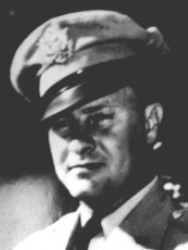
(Image credit: Findagrave)
The former Carswell Air Force Base in Fort Worth was named for Horace Seaver Carswell, a Medal of Honor winner from North Texas.
(Image credit: Findagrave)
Lt. Col. William Edward “Ed” Dyess was born August 9, 1916 to Richard T. Dyess, a judge, and Hallie Graham-Dyess in Albany, Texas. Dyess grew up working on the family farm and also held a number of odd jobs. He was a Boy Scout, but had trouble attending meetings while he was also working. The story is told of him that one week, a carnival had performed in Albany about the same time as he brought home a poor report card from school. He is said to have told his parents that it was all right, he was going to join the carnival anyway when he got older.
World War II had gripped the country for the better part of the last five years. This was the first peacetime July Fourth celebration in many years and for some cities, the first celebration of any kind since 1940 or 1941. Around the state, newspapers reported how it was observed:
Walter Leland Cronkite, Jr. is not a name that most people would associate with the State of Texas, but he had Texas roots. Walter, Jr. was born November 4, 1916 to Dr. Walter L. and Helen Lena Fritsche Cronkite in Missouri. The surname Cronkite is thought to be derived from a similar sounding Dutch name. However, traditional genealogical sources show that this particular Cronkite family had resided in the United States as far back as the middle 1600s with similar spelling, though for a time it was spelled “Cronkhite,” with an h after the k. Dr. Cronkite was a dentist like his own father had been. The family moved to Houston, Texas when Walter, Jr. was ten years old when Dr. Cronkite had accepted an offer to teach at a local dental school.
Continue reading Walter Cronkite, Jr., World War II Correspondent
Earlier this summer, World War II historian G. P. Cox posted an excellent blog entry in his blog Pacific Paratrooper about Japanese balloon bombs reaching the United States. His article was reblogged here immediately before this post. If you are interested in World War II in the Pacific, we highly recommend this blog.
 Texas History Notebook