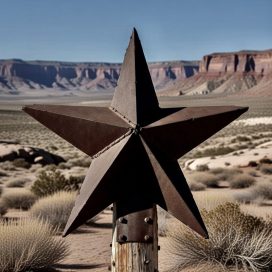
Marlboro Men

We do not advocate smoking. The health risks of smoking have been widely communicated to the American public for decades. Despite significant declines over the last 60 years, tobacco use continues and smoking is still considered the leading cause of preventable death in the United States.

For many years, there were no governmental restrictions on advertising nicotine products. Print, audio and video advertisements used images and slogans such as these to promote their products.

  • “Come to where the flavor is, come to Marlboro Country”
  • “Winston tastes good, like a cigarette should”
  • “I’d walk a mile for a Camel”
  • “Come up to Kool”
  • “Lucky Strike means fine tobacco”
  • “Call for Phillip Morris”
Continue reading Marlboro Men

Major Nicholas Nolan

Nicholas Merritt Nolan was born around 1835 in County Kilkenny, Ireland to James Nowlan and Bridget Maher Nowlan. Nolan emigrated to the United States as a youth. In 1852, he enlisted in New York in the United States Army as a private. He was promoted through the ranks and was a first sergeant at the outbreak of the Civil War. During the war, he was commissioned as an officer and served with the 6th United States Cavalry Regiment.

Continue reading Major Nicholas Nolan

Reynolds Cattle Co.

The parents of the Reynolds family were Barber Watkins Reynolds (1819 – 1882) and Anne Marie Campbell (1816 – 1909). A daughter, Sallie Reynolds Matthews, has written that her father’s heritage was English and Welsh, and that he was born in Oglethorpe County, Georgia. His family had resided in the United States for several generations and at least one of his ancestors had fought for Virginia in the Revolutionary War. The name Barber was his mother’s maiden name.

Continue reading Reynolds Cattle Co.

Colonel Ranald Slidell Mackenzie

Ranald Slidell Mackenzie was born on July 27, 1840 in Westchester, New York to Alexander Slidell Mackenzie (1803 – 1848) and Catherine Alexander Robinson Mackenzie (1814 – 1883). He was the oldest of their five children. His father was the son of John Slidell and Mary Mackenzie but his father had adopted the name of Mackenzie (his mother’s maiden name) in 1837. The explanation for the name change was that it was a condition set out in order for him to claim an inheritance from an uncle, his mother’s late brother. Alexander Mackenzie had served for many years in the United States Navy after entering as a midshipman in 1815. He was promoted to lieutenant in 1825 and commander in 1841.

Continue reading Colonel Ranald Slidell Mackenzie

Lambshead Ranch

Usually the names of three people are mentioned in the early history of the land that later became the Lambshead Ranch. They are Randolph Marcy, Jesse Stem and Thomas Lambshead. Marcy (1812 – 1887) well might be the better known of the three. He was an 1832 West Point graduate who served extensively in the American West during his thirty year Army career. His service included the Mexican-American War, Texas, the Pacific Northwest and the territories that later became the states of Oklahoma, New Mexico, Colorado, Utah and Arizona. Marcy retired in from the United States Army in 1881. One of his daughters had married General George C. McClellan. Marcy was the author of “The Prairie Traveler” published in 1859, which became widely known and used for its maps, illustrations and itineraries of the West. Marcy had mapped and described the area where the ranch is now located. Fort Marcy in New Mexico was named for him and was active from the time of the Mexican-American War until it was decommissioned in 1890.

Continue reading Lambshead Ranch