Fort Richardson

fort-richardson-park

(Image credit: Texas State Historical Association)

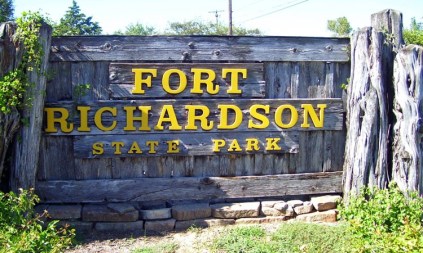
Fort Richardson was founded in 1866, following the end of the Civil War, first staffed near Jacksboro, Texas by elements of the 6th Cavalry.  It was temporarily relocated around 20 miles north to a location known as Buffalo Springs in Clay County one year later.  Buffalo Springs had the advantages of more plentiful water and timber, but was closer to the hostile tribes while also being further from supply depots in the Austin area.  Construction was begun at Buffalo Springs, but was abandoned in favor of the original Jack County location after an Indian attack and several months of drought.  The Jack County location was reestablished and consisted of about 300 acres along the Lost Creek tributary of the West Fork of the Trinity River.  Construction had to start over as the previously abandoned buildings in Jacksboro had been used for building materials by the local settlers.  Fort Richardson became the northern-most outpost in the chain of western forts.
Continue reading Fort Richardson

Joshua Houston

joshuahouston

(Image credit: Texas State Historical Association)

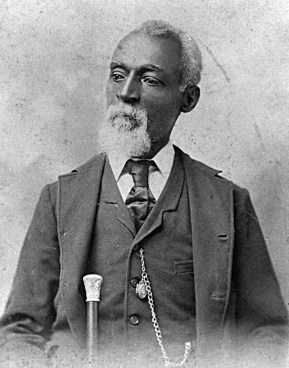
Joshua Houston (1822-1902) was born near Marion, Alabama and was a slave in the household of the wife of Sam Houston, Margaret Lea.  In the custom of the day, Joshua and his family were left to Margaret after the death in 1834 of her father, Temple Lea.  Margaret moved to Texas in 1840 after marrying Sam Houston in May.

Continue reading Joshua Houston

Mary Martin

marymartinpeterpan

(Image credit: Playbill)

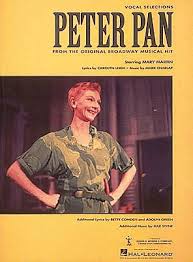
An eight foot tall bronze statue of Peter Pan was dedicated to Mary Martin on July 4, 1976 and is located on the south side of the Weatherford Public Library at 1014 Charles Street, near Soldier Spring Park in Weatherford, Texas.  It was dedicated as part of Weatherford’s American Bicentennial celebration.  Martin was depicted in a pose as Peter Pan, her 1954 Broadway character.  An earlier stylized statue of Peter Pan was dedicated in her honor in Weatherford’s Cherry Park recreation area, 300 S. Alamo Street, not far from her childhood home.

Continue reading Mary Martin

Sam Houston and Santa Anna

Santa Anna (Antonio López de Santa Anna) was born in Vera Cruz in 1794 and began serving in the Army in Spanish Mexico when he was a teenager.  He was said to have first fought in support for the Spanish against Mexican independence before joining the movement in 1821 in support of an independent Mexico.  He continued to be near the forefront of leadership in the young country of Mexico and helped defeat the Spanish effort to reclaim Mexico in the late 1820s.  Santa Anna was himself elected President in 1833.  The previous two decades had seen chaotic changes in the country of Mexico with the form of government varying from a constitutional republic to a centralist form with Santa Anna at the head, supported by the military.  The country was vast with the Central American part being largely populated and the North American portion being sparsely populated by Native American tribes and an increasing number of American settlers.  Under Santa Anna, its policy changed from encouraging settlements to being more restrictive toward them.

Continue reading Sam Houston and Santa Anna

Buffalo Hump

Buffalo Hump was a formidable Comanche war chief, thought to have been born around 1790.  He lived until around 1870 and was one of the most influential Comanche leaders during his lifetime.  His native name was Pachanaquarship and he was a respected leader among the Comanche tribe almost his entire adult life.  His band were called the Penetekas which is roughly translated “honey eaters” and though they ranged widely in Texas, they spent a considerable amount of time in the general area that is now Abilene.

Continue reading Buffalo Hump