Battle of the Neches

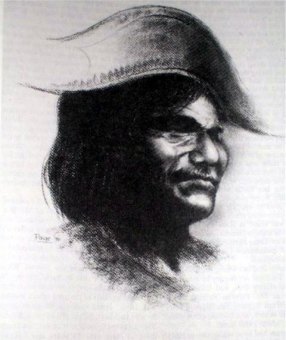
chiefbowles

(Image credit: TexasCherokeeNation.org)

On July 16, 1839, the last major battle between Texas forces and the Cherokee tribe along with other tribal bands took place.  The Cherokee had first come to Texas shortly after the turn of the century, long before the Texas Revolution, and had settled near the Red River.  Much of the time thereafter, their leader was Chief John Bowles, pictured in the image above, also known as Diwal’li.  There are other variations of his name, but we will refer to him as Chief Bowles.  The Chief was thought to have been born around 1756 to a Cherokee mother and a Scotch-Irish father.  He is said to have had the features of both parents including reddish hair, Cherokee features and freckled skin.

Continue reading Battle of the Neches

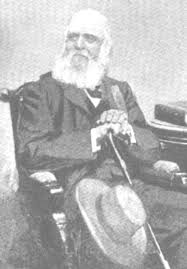
Neil Love McLennan (1787-1867)

Neil .jpg

(Image credit: sutphen.org)

One of the early settlers near Waco, Neil Love McLennan was born in Isle of Skye, off the western coast of Scotland in 1787.  He came to America in 1801, first settling in North Carolina, married the former Christian A. (Darthal) Campbell in 1814, and then relocated in 1816 to Florida.  After living there a number of years, in 1834 he and his family along with two brothers and others sailed a three masted schooner from Pensacola, Florida to the mouth of the Brazos.  They arrived there in early March and continued on upriver as far as they could.

Continue reading Neil Love McLennan (1787-1867)

Yturria Ranch

During its ownership and control of Texas, Spain had attempted to colonize the areas along the Rio Grande to take advantage of its fresh water system.  The King of Spain granted ownership of blocks of land to certain private individuals who had shown an interest in colonization and had resided in the area for a number of years.  After Mexico declared its independence from Spain, most of the Spanish grants were upheld.  Similarly, most were also recognized under the Texas Republic, following its establishment.

Continue reading Yturria Ranch

Rachel Parker Plummer

Cynthia Ann Parker’s tragic story is better known, but there were other individuals including Rachel Parker Plummer who were taken by the Comanches in the attack on Fort Parker.  The battle occurred on May 19, 1836 at a fort near Groesbeck, Limestone County, Texas.  At the time, there were thirty or more members of the extended Parker family living in or around the stockade fort.  Killed were Silas Mercer Parker, John Parker, Samuel Frost, Robert Frost and Benjamin Parker.  Those who were captured included Cynthia Ann Parker, her brother John Richard Parker, Elizabeth Kellogg, Rachel Parker Plummer and her three year old son James Pratt Plummer.

Continue reading Rachel Parker Plummer

Moses Austin Bryan (1817-1895)

mosesaustinbryan

(Image credit: http://www.tamu.edu)

As we approach the anniversary of the Battle of San Jacinto, we consider Moses Austin Bryan.  He was an eyewitness to some of the key events in Texas history.  Born in Herculaneum, Missouri, he came to Texas with his parents in 1831.  He had first worked for his uncle Stephen Fuller Austin in a store in Austin’s Colony before enlisting in the Texas Army.  After enlistment, he served as a secretary to Stephen F. Austin, was a witness to the signing of the Texas Declaration of Independence, fought in the Battle of San Jacinto, interviewed Santa Anna after his capture at San Jacinto (Bryan was the closest Spanish speaking Texas soldier to Sam Houston), served as secretary to the Texas Legation to the United States in 1839,  participated in the Somervell Expedition in 1842 and served as a Confederate officer in the Civil War.

Continue reading Moses Austin Bryan (1817-1895)