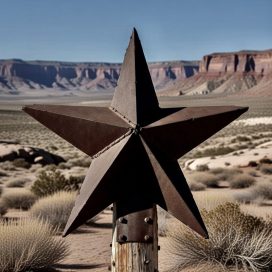
This battle took place in late 1837 in North Texas involving a group of Texas Rangers and a number of mostly Keeci Indians. According to the various accounts, a Lt. Van Benthuysen was searching the area looking for some stolen horses. After several weeks of scouting, the Rangers encountered the Keeci (also spelled as Kichai and Keechi) at a place known for its appearance, mounds of rock described as rock teepees or rock houses. According to all accounts, the Keeci outnumbered the Rangers several times over, with the Indians amounting to an estimated 150 and the Rangers numbering seventeen or eighteen. The Rangers held out after losing four of their party. Also during the battle, the Indians set off a ring of fire around the troops who escaped on foot through the smoke, but not until having lost ten men, over half their number. Out of their eighteen, four were killed in the battle and six were killed during the escape. They walked and foraged for ten days until reaching a friendly Kickapoo camp near the present city of Dallas where they stayed for a while before returning to safety near Houston.
Tag: frontier times
Fort Richardson
(Image credit: Texas State Historical Association)
Fort Richardson was founded in 1866, following the end of the Civil War, first staffed near Jacksboro, Texas by elements of the 6th Cavalry. It was temporarily relocated around 20 miles north to a location known as Buffalo Springs in Clay County one year later. Buffalo Springs had the advantages of more plentiful water and timber, but was closer to the hostile tribes while also being further from supply depots in the Austin area. Construction was begun at Buffalo Springs, but was abandoned in favor of the original Jack County location after an Indian attack and several months of drought. The Jack County location was reestablished and consisted of about 300 acres along the Lost Creek tributary of the West Fork of the Trinity River. Construction had to start over as the previously abandoned buildings in Jacksboro had been used for building materials by the local settlers. Fort Richardson became the northern-most outpost in the chain of western forts.
Buffalo Hump
Buffalo Hump was a formidable Comanche war chief, thought to have been born around 1790. He lived until around 1870 and was one of the most influential Comanche leaders during his lifetime. His native name was Pachanaquarship and he was a respected leader among the Comanche tribe almost his entire adult life. His band were called the Penetekas which is roughly translated “honey eaters” and though they ranged widely in Texas, they spent a considerable amount of time in the general area that is now Abilene.
Buffalo Soldiers in Texas
The concept of all-black regiments had originated during the Civil War when northern states organized regiments of free blacks from the north and former slaves from the south. This concept was met with resistance in the north, which resistance is generally accepted to have been racially oriented in nature. However, by 1863 the U. S. Colored Volunteers had been organized into a cavalry regiment, an artillery regiment and almost two dozen infantry regiments. It is estimated that about one out of ten Union soldiers serving in the American Civil War were black.
Fort Concho
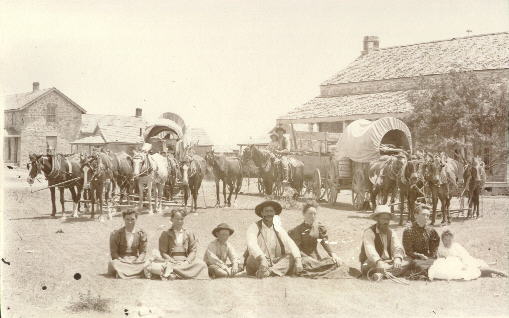
(Image credit: Fort Concho National Historical Landmark)
Fort Concho was one of the later forts established in the frontier system, opened in 1867 after the Civil War. It took its name from the nearby branches of the Concho River, the water system that was a critical resource in the area. It was positioned as a replacement for Fort Chadbourne that was located about 45 miles to the north northeast. Fort Chadbourne’s water supply had failed prior to the Civil War.
 Texas History Notebook