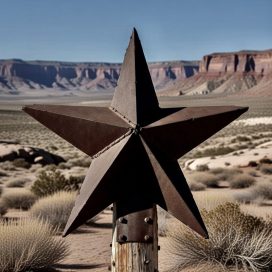
Fort Fisher, as it was known, was set up for a short time on the west bank of the Brazos river near the settlements that would give rise to Waco. It was established by the Texas Rangers to provide security for settlers in 1837 and to the best of our knowledge, it was also abandoned the same year. The outpost was named for William S. Fisher, Secretary of War of the Republic of Texas at the time. Fisher was a long time member of the Texas Army. He would later become a participant in the ill fated Mier Expedition after which he would be captured and imprisoned in Mexico. Fisher passed away around two years after being released from his confinement in Mexico.
Continue reading Fort FisherTag: history
Rufus Higginbotham, Co-founder of Higginbotham Brothers
The Higginbotham family founded a chain of what became hardware stores a decade and a half after the Civil War. When the business matured, they had locations in many towns across Texas. Hardware stores and lumber yards with Higginbotham in the name were common in Texas.
Continue reading Rufus Higginbotham, Co-founder of Higginbotham Brothers
Babe Didrikson Zaharias
Mildred Ella Didrikson was born June 26, 1911 to Ole and Hannah Marie Olsen Didriksen in Port Arthur, Texas. Her father was a carpenter in the maritime industry. When she was three years old, the family moved to Beaumont, Texas where she went to public school. She was a gifted athlete and excelled at about every sport she participated in. She picked up her nickname “Babe” (after Babe Ruth, the baseball star) after slugging five home runs in a baseball game, though her mother said her nickname had been “Baby” earlier on. She adopted the spelling Didrikson when she was an adult.
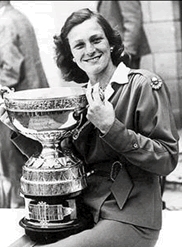
(Image credit: ancestry.com)
General William Rufus Shafter
William Rufus Shafter was a Union officer in the Civil War. Born in 1835 in Michigan, he was in seminary at the outset of the Civil War and enlisted in the Union Army. About thirty years after the end of the Civil War, he was awarded the Medal of Honor for meritorious service pertaining to an incident on May 31, 1862. Shafter had been a lieutenant involved in bridge construction near Fair Oaks, Virginia when the Union forces were engaged by Confederate troops. Shafter left the bridge and took about twenty-two men to counter the Confederate attack. All but four of his troops were killed and he received a flesh wound and possibly other wounds. However, Shafter stayed on the field, concealing his wounds. In a later battle, he was captured by the Confederates and served three months in a prison camp in 1864 before being released. He was then assigned to the 17th United States Colored Infantry, which appears to be his command when the war ended. Shafter had been elevated to the rank of brevet brigadier general.
Fort McKavett
Fort McKavett is located near Menard in Menard County, Texas. It was one in a line of Texas frontier forts built during the era to protect settlers who were moving into the area. The forts were situated roughly in a diagonal line connecting the Red River to the Rio Grande and about one hundred miles west of the currently occupied land at the time. United States Army infantry colonel Thomas Staniford was given orders to build a military post at the headwaters of the San Saba River and he arrived with his regiment on March 14, 1852. The headwaters were a natural spring and Staniford decided to move the location about two miles down from it where the spring formed a small lagoon, favoring the water supply there.
 Texas History Notebook