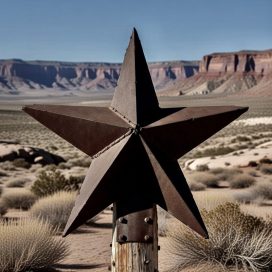
If you were to do an internet search any day for “Lebman saddles for sale,” you would probably find a number of saddles that are available to be used as working saddles, held as collector’s items or as family keepsakes. They were made in a San Antonio saddle shop a few blocks from the San Antonio River on Flores Street. The former location is now a restaurant, but for many years, it was a busy store for leather goods.
Continue reading H. S. LebmanTag: outlaws and crimes
The Dillinger Gang and Texas Connections
John Dillinger was a well known gangster who operated in the United States until his death in 1934. He had been born in Indianapolis, Indiana on June 22, 1903. Dillinger’s mother died when he was three years old and he was raised by his father and stepmother, with whom he is said to have had a difficult relationship. The family moved around somewhat and Dillinger dropped out of school. Around 1923, he joined the United States Navy. He was assigned to the U. S. S. Utah but only served a short while before deserting, after which he launched his criminal career. Not long afterward, Dillinger was arrested, tried and convicted for a 1924 robbery of a local grocery in his adopted home town of Mooresville, Indiana and was sentenced to the Indiana State Prison. There he was exposed to fellow convicts including a number who had been bank robbers. Upon his parole in the spring of 1933, he and several associates began to commit a series of bank robberies in Indiana and Ohio.
Law Officers Killed By The Barrow Gang: Cal Campbell (Victim 9)
Constable Cal Campbell was the last lawman to be killed by the Barrow gang. The list of law officers who were victims of the gang is as follows:
Eugene Moore, Atoka, OK, 8/5/1932
Malcolm Davis, Dallas, TX 1/6/1933
Harry McGinnis, Joplin, MO 4/13/1933
Wes Harryman, Joplin, MO 4/13/1933
Henry D. Humphrey, Alma, AR 6/26/1933
Major Crowson, Huntsville, TX 1/16/1934
E. B. Wheeler, Grapevine, TX 4/1/1934
H. D. Murphy, Grapevine, TX 4/1/1934
Cal Campbell, Commerce, OK, 4/6/1934
Continue reading Law Officers Killed By The Barrow Gang: Cal Campbell (Victim 9)
Henry and Ivy Methvin
Ivan “Ivy” Terrell Methvin was born April 5, 1885 in Louisiana to Hamilton Terrell and Mary E. Barron Methvin. Ivy was one of five children and their names all began with the letter I: Iverson Victor (1876-1952), Izaarh (or possibly Isaiah, 1877- about 1894), Isaac (1879- about 1894), Idonia (the only sister, 1882-1910) and Ivy, all born in Louisiana. In the 1880 census, Hamilton Methvin’s profession was listed as being a farmer. In some listings, Izaarh and Isaac have the same years of birth and death, but in the 1880 census, Isaac is not quite one year old while Izaarh (possibly just a misreading of the written name) was at least one year older. Of the children, Iverson survived the longest, living until 1952, working as a farmer for many years and later working as a cobbler of shoes in Louisiana. Iverson and his wife Sarah Huggins Methvin had a large family. The sister Idonia married a man named Campbell and had a small family before she passed away at around the age of 28 in Oklahoma. Hamilton Terrell Methvin died a about eighteen months after Ivy was born.
Law Officers Killed by the Barrow Gang: Major Crowson (Victim Number 6)
The headline of the Corsicana Daily Sun, January 16, 1934, read “Noted Texas Desperado Shoots Down Guards On Eastham Prison Farm,” referring to Clyde Barrow. Though Clyde was directly involved in the prison break, the headline overstated Barrow’s role in the death of one guard and the serious injury of another. Guard Major Crowson (Major was his given name) was said to have been shot point blank in the abdomen by convict Joe Palmer. Another guard by the name of Olin Bozeman was shot in the hip, apparently by convict Raymond Hamilton although in early accounts, various other prisoners were said to have shot the guards. Bozeman recovered from his wounds, but Crowson succumbed to his gunshot wound some eleven days later, after identifying Palmer as the one who shot him.
Continue reading Law Officers Killed by the Barrow Gang: Major Crowson (Victim Number 6)
 Texas History Notebook