The actress known as Ginger Rogers (Virginia Katherine McMath) was born July 16, 1911 to William Eddins McMath and the former Lela Emogene Owens in Independence, Missouri. Her birth father was an electrical engineer and her mother was a reporter, scriptwriter and movie producer. Her parents separated soon after she was born and Ginger was raised by her mother and maternal grandparents in Kansas City. When she was nine years old, Lela married John Logan Rogers. Ginger took her stepfather’s last name, although she was likely never formally adopted. Her mother wrote for a local newspaper in Fort Worth, Texas covering entertainment, exposing Ginger to the field and the life of entertainment. Ginger won a Charleston dance contest when she was fourteen years old and is known to have begun appearing in vaudeville shows after that.
Continue reading Ginger RogersTag: texas
William E. Easterwood, Jr.
W. E. Easterwood, Jr. was a wealthy Dallas businessman who became known for his philanthropy as much as for his enthusiasm for aviation. Easterwood had been born in 1883 in Wills Point. After serving in World War I, he returned to North Texas to earn his wealth in various businesses he started in Wichita Falls. Easterwood later moved to Dallas and became an ambassador for his adopted city.
Continue reading William E. Easterwood, Jr.The Younger Brothers
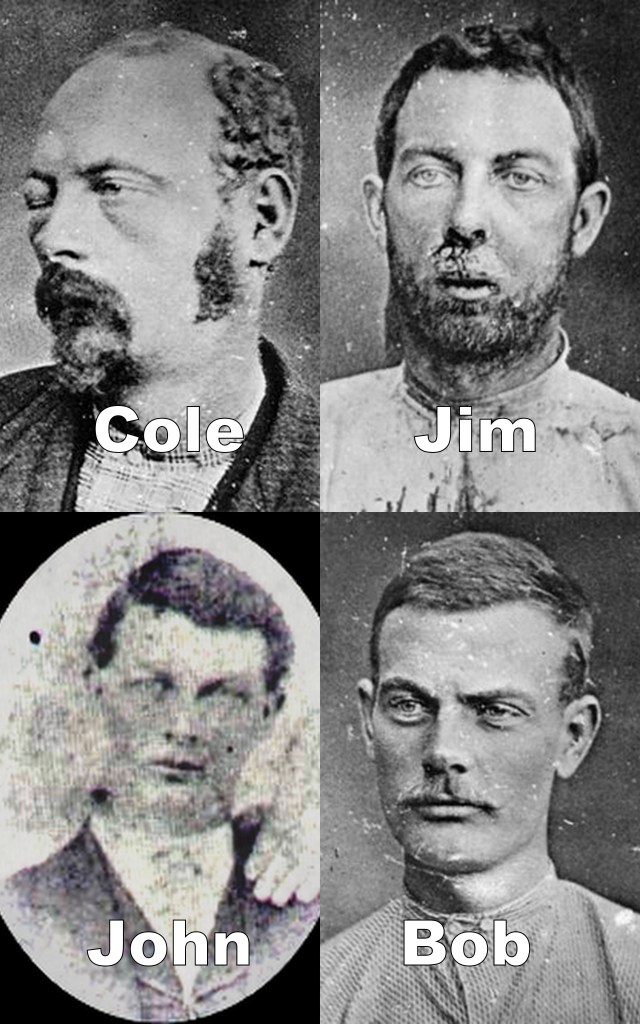
The Kansas City Times (Kansas City, Missouri) issue of June 20, 1897 carried the headline, “The Younger Brothers May Be Pardoned” and recounted events leading up to their incarceration. A Minnesota governor was said to be considering a pardon of Jim and Cole Younger for time served. Some twenty-one years earlier, the James – Younger Gang had attempted to rob the First National Bank of Northfield, Minnesota on September 7, 1876. The Youngers (Jim, Cole and Bob) and their associates, Frank and Jesse James, along with four other individuals (Bill Stiles, Clell Miller, Charlie Pitts and Bill Chadwell (a/k/a Stiles)) had planned to meet to attempt to rob the bank. They rode in and began the bank robbery with Jesse, Cole, and Pitts going inside the building and the other five standing guard outside. The outlaws were discovered and citizens began to fire on them. Cole was shot in the hip, Bob was shot in the elbow and Jim took a round to the jaw. Miller and Chadwell/Stiles were killed outright along with one civilian, believed to have been shot by Cole, and one employee of the bank. Pitts, Frank and Jesse were also wounded. A posse caught up with the Youngers, the James and Pitts. Frank and Jesse escaped, the Youngers were captured and Pitts was killed. The Youngers pled guilty to the bank robbery attempt in order to avoid being executed.
Joel Roberts Poinsett
Joel Poinsett is not known to have ever resided in Texas but was a career public servant and diplomat whose efforts could possibly have led to the addition of Texas to the United States prior to the Texas Revolution.
Weapons Preferred by Bonnie and Clyde
Based on numerous books and accounts, Clyde Barrow is said to have favored the BAR (Browning Automatic Rifle) due to its .30 caliber bullet and rapid fire ability. The BAR projectiles could also penetrate auto bodies. The BAR (often known by its military designation of M1918) was designed by John Browning in 1917 for use in World War I by the American Expeditionary Forces in Europe as a replacement for the French-made rifles that they were first issued, though it did not come into everyday use until later.
 Texas History Notebook