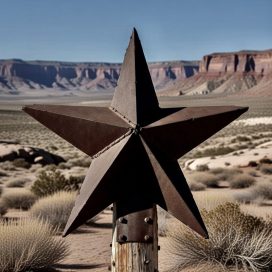
The Immortal 32 is a name given to a group of men who responded to an appeal from Colonel William Barrett Travis for help in defending the Alamo. These men were from Gonzales and they arrived March 1, 1836. Travis had sent letters to several other settlements but Gonzales was the closest to the location. All of the Gonzales contingent died in the battle.
Forty years after the battle the Galveston Daily News in its issue of July 19, 1876 listed these names – with later necessary spelling corrections in brackets: Isaac Baker, John Cane [Cain], George W. Cottle, David P. Cummings [Cummins], Squire Damon [Daymon], Jacob C. Darst, John Davis, William Dearduff, Charles Despallier, William Fishbaugh, John Flanders, Thomas Jackson, Johnny Kellogg, Andrew Kent, George C. Kimball (also spelled Kimble), John G. King, William P. King, Jonathan Lindley, Albert Martin, Jesse McCoy, Thomas R. Miller, Isaac Millsaps, Dolphin Floyd, Galba Fuqua, John E. Garvin, John E. Goston [Gaston], James George, William Summers, George Tumlinson, Robert White, Claiborne Wright and George Neggan. With the exception of more spelling differences, the previous listing appears to agree with the list attributed to Dr. Amelia Worthington Williams (1876 – 1958), originally published in 1931. Dr. Williams was born in Texas and wrote “A Critical Study of the Siege of the Alamo and of the Personnel of its Defenders.”
Later lists now exclude John G. King, father of William P. King. John Gladden King did not die in the battle and lived until 1856. William King also had a younger brother named John Gladden King, Jr., but he would have only been ten or eleven years old at the time and was not at the battle. Almaron Dickinson, husband of Susanna Dickinson and a resident of Gonzales, is also usually included with this group. He was listed separately because he was already at the Alamo along with his wife and daughter when the call came for assistance. Five Texas counties would be named for members of this group: Cottle County, Floyd County, Kent County, Kimble County and King County.
John Gladden King was born February 8, 1790 in Fairfield, South Carolina to John King and Nancy Gladden King. In the 1800 census he was living with his parents, still in South Carolina. John is said to have participated in the Gutierrez-Magee Expedition in 1812. This was a joint operation between the United States and Mexico in an unsuccessful attempt to try and help Mexico to throw off the Spanish rule. This was more than twenty years prior to the Texas Revolution and more than ten years before the events leading up to1824 that did lead to Mexican independence from Spain.
After King returned from this service, he moved to Tennessee for a few years. There he married Parmelia Millie Parchman (1798 – 1879) in 1817. The couple had two daughters before moving to Mississippi where William Philip King, their first son, was born in 1820. The couple continued to move from time to time with more children being added to the family in Alabama, Arkansas, Tennessee again and Louisiana, where they were living by about 1825. After about five years, they appear to have relocated once more, this time to Texas where they would remain.
The Kings settled near Gonzales and received a land grant in the Green Dewitt Colony. Upon settling in Gonzales they began farming and engaging in other businesses. As the potential conflict began to accelerate between Mexico and the Anglo settlers in Texas, Gonzales was near the axis of it, Bexar (San Antonio). Gonzales had already been a place of conflict in early October of 1835, not quite six months prior to the Alamo battle, when Mexican troops unsuccessfully tried to take back a small cannon that they had given to the people of Gonzales for defense some four years earlier.
When the call came for aid at the Alamo, these 32 responded and they arrived about March 1, 1836. By then, Santa Anna and his army had already surrounded the Alamo. The Gonzales contingent was still allowed to enter, perhaps because Santa Anna was confident of his ultimate success. There were likely a half dozen or more men from Gonzales who were already at the Alamo. In addition to the above names, the following individuals from Gonzales are also listed on the centennial monument in Gonzales: Daniel Bourne, George Brown, Jerry C. Day, Dickerson, Andrew Duvalt, John Harris, Wm. J. Lightfoot, Marcus L. Sewell and Amos Pollard (a surgeon).
In connection with the Texas Centennial of 1936, the State of Texas commissioned a historical marker (Number 2624). It was installed at the intersection of St. Louis Street and Smith Street in Gonzales, Texas. The marker is constructed of pink granite with a full length bronze plaque topped by a single five pointed star. The marker lists the names of the Gonzales individuals along with their estimated ages.
William P. King was considered to be the youngest defender to die in the Alamo battle. He was born on October 8, 1820, making him fifteen years old on March 6, 1836. About one year older was Galba Fuqua. Galba was related to William King by marriage since he was the nephew of Benjamin Fuqua, the former husband of King’s sister Nancy. Benjamin Fuqua had died of natural causes earlier in 1836 after having served in the defense of Gonzales a few months before.
The Texas legislature formed King County out of what was previously within the boundaries of Bexar County on August 21, 1876. It was only one of the many counties created with this legislation, including Armstrong, Bailey, Borden, Briscoe, Crosby, Dallam, Dawson, Deaf Smith, Dickens, Donley, Fisher, Floyd, Gaines, Garza, Gray, Hale, Hall, Hansford, Hartley, Hemphill, Hockley, Howard, Hutchinson, Kent, Lamb, Lipscomb, Lubbock, Lynn, Martin, Mitchell, Moore, Motley, Ochiltree, Oldham, Parmer, Potter, Randall, Roberts, Scurry, Sherman, Stonewall, Swisher, Terry, Wheeler, and Yoakum. These counties were created on that date but were “organized” on various dates years later. Not included in this listing are Cottle and Kimble counties which were created and organized at other times.
King County is located east of Lubbock in West Texas. Its county seat is Guthrie. It is bordered by Cottle County, Foard County, Knox County, Stonewall County and Dickens County.
These dates are usually key dates associated with the Texas Revolution:
- October 2, 1835 – Battle of Gonzales.
- December 5, 1835 – Siege of Béxar.
- Feb. 23, 1836 – Battle of the Alamo begins.
- March 2, 1836 – Convention of 1836.
- March 6, 1836 – Fall of the Alamo.
- March 27, 1836 – Goliad Massacre.
- April 21, 1836 – Battle of San Jacinto.
© 2024, all rights reserved.
 Texas History Notebook
Small mistake on date:
Gonzales had already been a place of conflict in early October of 1935, not quite six months prior to the Alamo battle, when Mexican troops unsuccessfully tried to take back a small cannon that they had given to the people of Gonzales for defense some four years earlier.
LikeLiked by 1 person
Thank you and good catch. 1935 should have been 1835. Change made!
LikeLike