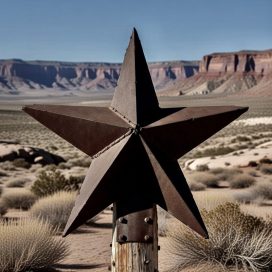
Henri Castro (sometimes called Compte Henri De Castro de Boxar) was living in Paris, France at the time he arranged in 1842 to secure a land grant from Republic of Texas president Sam Houston. His first grant proposal was to bring 200 families to Texas the following year. He was not able to fulfill this agreement. A second effort was more successful. Castro’s ambitious agreement was to bring 600 families from Alsace in France to settle in Texas.
According to genealogy records, Castro was born in Bayonne, France in July, 1786 to a family that was of Portuguese heritage and the Jewish faith. His ancestors are believed to have fled to Southwest France from Portugal during the Spanish Inquisition. Generally, the Spanish Inquisition is described as a movement by Catholic monarchs in Spain and her colonies to promote orthodox religious beliefs. It went on for over three centuries and resulted in some executions, some expulsions, and other related events. His family was considered to be wealthy. Castro was younger than the emperor, but was alive during much of the reign of Napoleon Bonaparte (1769 – 1821). Castro was appointed to serve in a welcoming committee when the emperor during a visit and on another ceremonial occasion involving the emperor in 1806. Seven years later in 1813, Castro married Amelia Mathias, a widow about his age. After the death of Napoleon, Castro came to the United States, becoming a citizen in 1827.
Castro returned to France from time to time and became involved in a banking business there. It was through his financial activities that he became acquainted with Sam Houston. This led to Castro receiving his empresario grant. Empresario grants were contracted by Mexico often from the State of Coahuilla and later with the Republic of Texas to bring colonists into the area. President Houston was motivated to make this agreement since there was no Anglo settlement west of San Pedro Creek in San Antonio and east of the Rio Grande. The area, however, was inhabited from time to time by Comanche, Apache, Tonkawa, Lipan and other tribes.
The Republic of Texas contracted for the establishment of four empresario colonies: Peters’ Colony in 1841, Fisher and Miller’s Colony in 1842, Castro’s Colony in 1842 and Mercer’s Colony in 1844. Heads of families were eligible to receive 640 acres of land; single men over the age of seventeen could receive 320 acres. The qualifications included requirements to locate within the boundaries of the colony and cultivate at least fifteen acres of their grant.(1) There were various other types of grants in addition to these empresario grants.
Castro’s grant itself was fairly large. In an article in the Hondo Anvil Herald on August 29, 1908, it is described as including portions of Medina, Uvalde, Zavala, LaSalle, McMullen, Frio, Atascosa and Bexar counties. Castro brought his first group of settlers to Texas in February of 1843. The article states that 485 families and 457 single men (5,200 individuals) came in twenty-seven ships, arriving on the Texas coast in September, 1844. Not all of those who emigrated to Texas in this group continued to the colony. Those who did were led by Castro to the area. 554 certificates were issued for land.
The first town established was named Castroville by a vote of the colonists and was located at a bend of the Medina River, about twenty-five miles from San Antonio. Towns that were later established included Quihi, Vandenburg (later abandoned during an extended drought), New Fountain and D’Hanis. Other small villages grew up as well. Medina County was formed in 1848 with Castroville as its first county seat.
The article gave the cost of transportation at $30, exclusive of provisions, with Castro advancing this cost for some. Castro was said to have spent over $40,000 of his own funds in organizing the colony for which he received no reimbursement but rather 38,400 acres of land.
Life was typical but hazardous in the frontier during that period. From time to time, colonists suffered from hardships including drought, a lack of food, flu, cholera, diphtheria, other epidemics, depredations by the native tribes and bandits. In an article from the Hondo Anvil Herald dated June 22, 1956, the writer tells of a family named Decker. A grandmother in the family had suffered from sunstroke and was believed to have been killed in 1870 by Indians and tossed from a bluff above Verde Creek. In the same family, a father, a son, a daughter and an elderly woman living with them died from eating a poisonous plant they had thought to be watercress, like they enjoyed in the “old country.” This tragedy was followed by the deaths of the mother and two newborn sons due to unknown causes only two months later. A descendant of the family related that during his lifetime, he had personally witnessed obtaining water five different ways: buckets drawn by a horse, by a rotary pump operated by horse power, by a windmill, by a gasoline pump and now by an electric pump. The Deckers’ deed was signed by Sam Houston.
The area has long had a strong Roman Catholic presence. Since the settlers were predominantly Catholic and priests are believed to have been among them, the Catholic Church was established in the area from the outset. Churches were organized and the first parish was St. Louis in Castroville, established the month that the settlers arrived in 1844. The name St. Louis was in honor of the king of France. The first mass was celebrated and the first church was completed later that year.
Henri Castro and his wife Amelia are believed to have had two sons. Likely the best known of their children was Lorenzo who apparently died prior to 1920. Lorenzo served as a captain in the Confederate Army during the Civil War and remained in the area all his life. Lorenzo is said to have been involved in managing the colony after the death of his father. He also published a book called “The Republic of Mexico in 1882.” In the introduction, the story of Castro’s Colony is related. The second son was named Orlando. Little is known about Orlando other than he, his brother Lorenzo and their father Henri are mentioned in some published legal notices.
Henri Castro had worked for decades to make Castro’s Colony a success, although he is not personally known to have accumulated much, if any, wealth for his endeavors. He died on November 3, 1865 in Monterrey, Mexico after becoming ill on his way to France and was buried there. Amelia, his widow, survived him until her own death on February 28, 1871. There is a monument in Henri’s honor in the St. Louis Cemetery in Castroville where Amelia is buried. Lorenzo and his wife Augustine are believed to be interred there as well, although Lorenzo’s grave is unmarked.
As noted, Castroville is named for him as is Castro County in the Panhandle of Texas.
(1) https://www.glo.texas.gov/history/archives/forms/files/categories-of-land-grants.pdf
© 2024, all rights reserved.
 Texas History Notebook