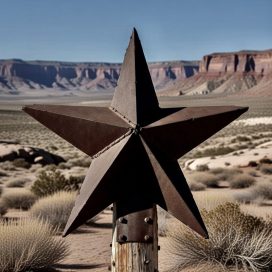
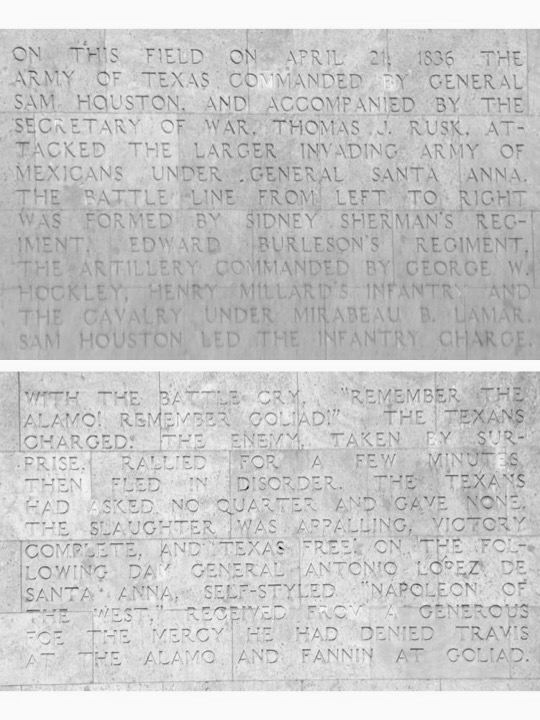
The San Jacinto Monument is one of the most recognizable symbols of Texas history. It was designed to commemorate the battle of April 21, 1836 in which the Texas Army led by General Sam Houston defeated Mexican troops led by General Antonio López de Santa Anna. For years prior to the Texas Centennial, various ideas had been discussed regarding ways to celebrate the anniversary. The site of the battle was chosen for the location of a monument.
On January 6, 1935, an article in the San Antonio Express Sunday morning edition discussed the matter. The State of Texas had approved a budget for the purpose of memorials to commemorate the upcoming date. A state-wide commission was created for the purpose. Its president was Cullen F. Thomas. As various towns and communities lobbied for part of the funds, Thomas was quoted as saying that it would not be possible without the assistance of historians to make the choices. The Texas Congress had allocated a total of $3,000,000 out of which $1,250,000 would go to Dallas in connection with the centennial exposition, $300,000 each would be offered to San Antonio and Houston, $400,000 was to be divided among Goliad, Gonzales, Nacogdoches, Washington-on-the-Brazos, Huntsville and “other cities and towns with historical backgrounds incident to the making of Texas independence” with the remaining $750,000 to be used for advertising and promotion.
Thomas’ committee concluded that it could not divide the $400,000 in any way that would be significant enough to accommodate the various communities which had made requests. Both San Antonio and Houston had agreed to accept their allocations. San Antonio had planned to issue municipal bonds to raise at least another $500,000. The article reported that Dallas had voted to issue $3,000,000 in bonds and planned to try and raise another $2,000,000 in private contributions to fund its plans. Various other communities stated their plans and that many had already raised funds to create monuments and other projects for their historic sites. Houston planned to use its $300,000 to begin funding to erect a memorial on the San Jacinto battlefield, augmented by private funds.
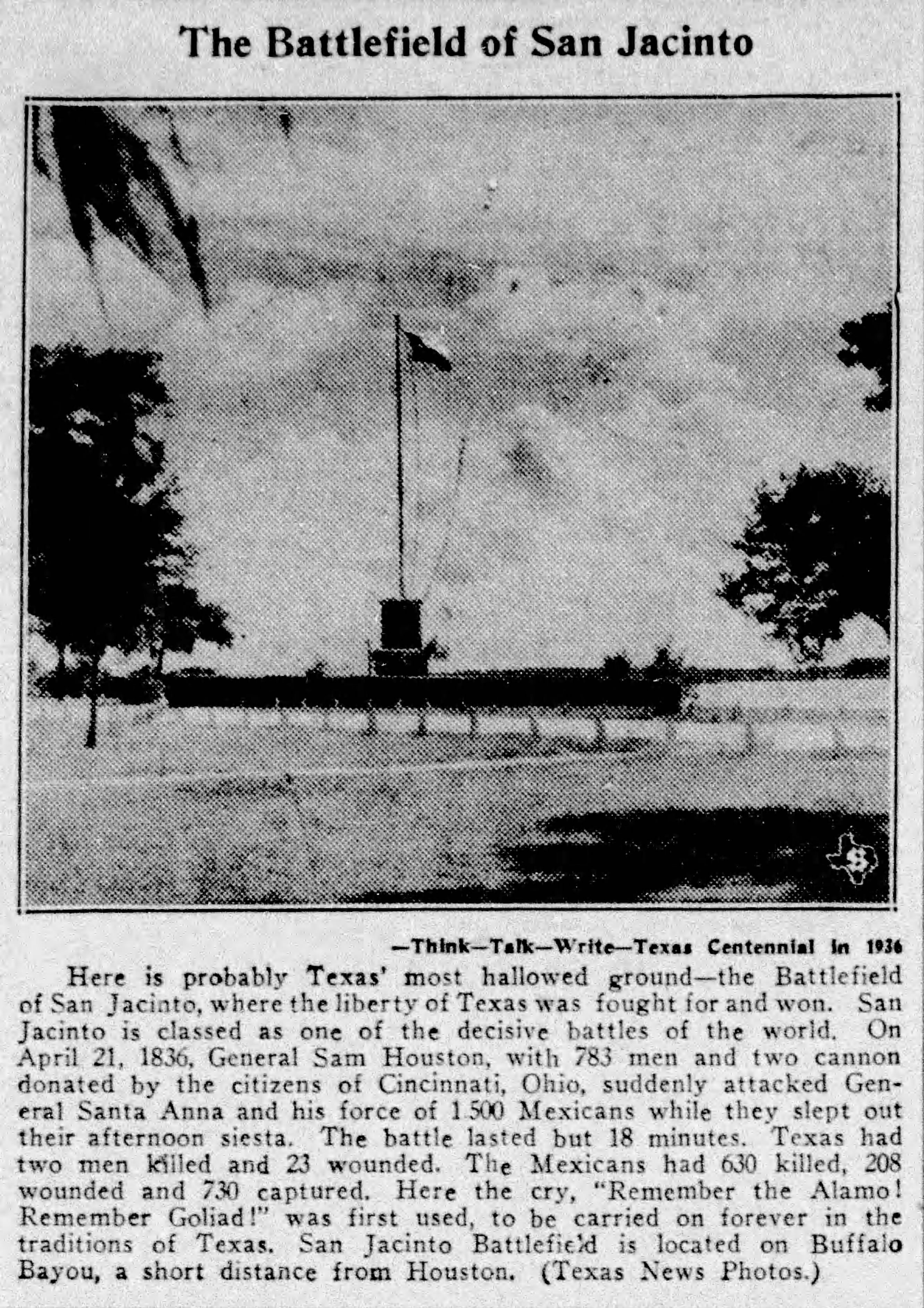
Before construction of the monument was begun, the battlefield was mostly an open field. A small cemetery was located there and it included a 15 foot tall monument erected in 1881 at the grave of Benjamin Rice Brigham. Around the base of the monument are engraved several other names, all presumed to be casualties from the battle. Other graves were located there as well. The state of Texas had begun acquiring parcels of land in the 1800s. The area was designated a state park in 1907. The 1935 newspaper image below depicts a small monument and flag pole erected around 1910. It was anchored in a concrete base and was built on the edge of the Houston Ship Channel. A landing went to the water’s edge and from time to time, boat tours were offered to bring visitors to the site.
For the next two years, events were timed to coincide with San Jacinto Day, April 21. Groundbreaking took place in 1936 and the cornerstone was was laid one year later. The cornerstone ceremony was assisted by Andrew Jackson Houston, son of Sam and Margaret Lea Houston. Total cost of the monument as completed and dedicated on April 21, 1939 was $1,500,000. Its height was about 570 feet tall. Said to be the tallest masonry structure in the world, it was 15 feet taller than the Washington Monument.
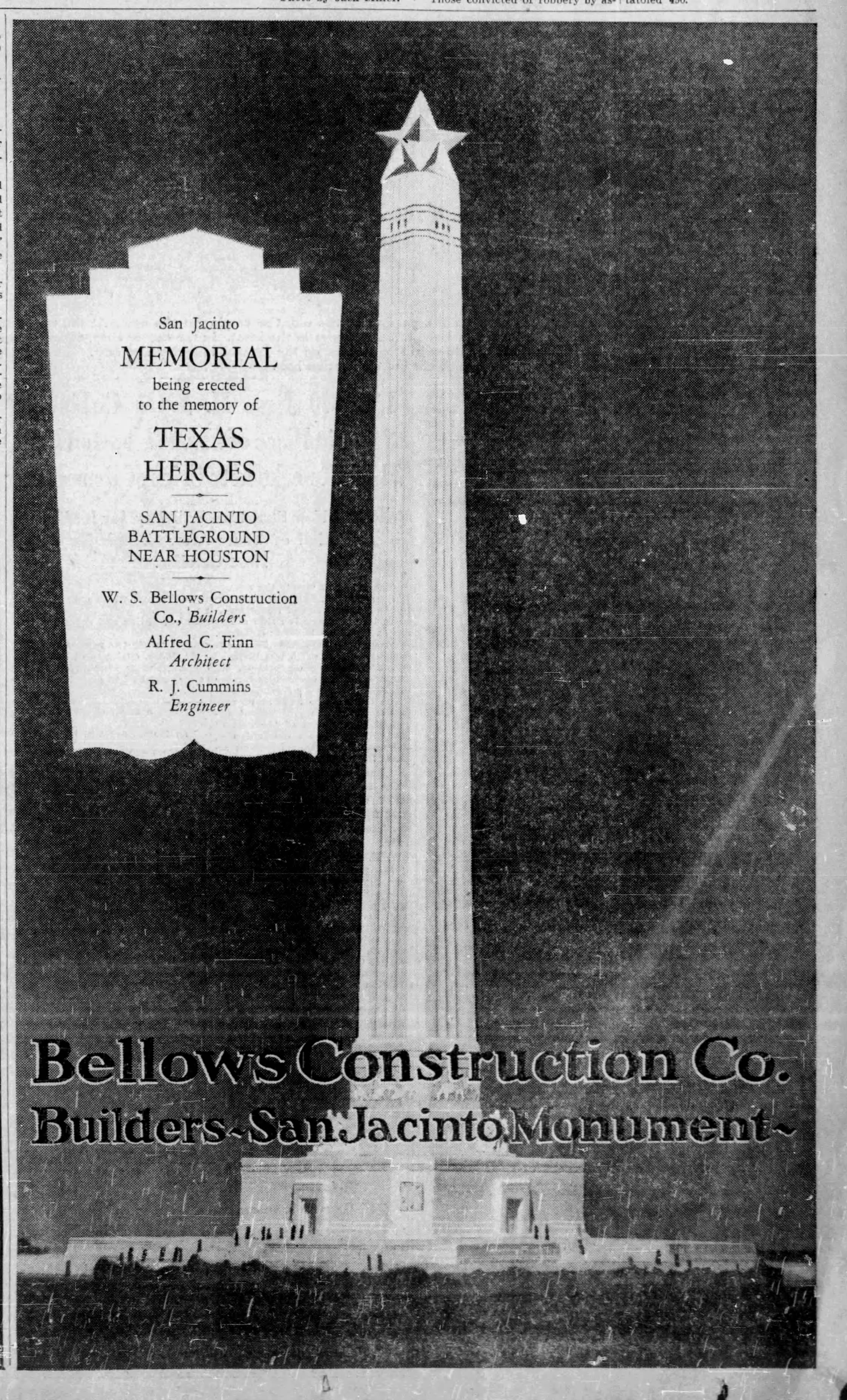
The parties involved in the construction of the project were as noted above: W. S. Bellows Construction Company, general contractor; Robert J. Cummins, engineer and Alfred C. Finn, architect. Finn was a native Texan and had begun his career in North Texas before settling in Houston. Many of the buildings Finn designed were in Harris County.
A newspaper article from the Midland Reporter-Telegram issue of May 1, 1986 provided more information on the construction. The tower portion was poured concrete, clad in Texas Cordova shell limestone quarried west of Austin in Burnet County. The stone was said to be millions of years old, dating from the Lower Cretaceous Period and showed evidence of fossils. The first 60 feet of the stone above the museum roof was sculptured whereas the remainder was left in its rough sawn condition. The sculptured blocks of the base weighed an estimated 8,000 pounds each and the rough finished blocks weighed 500 pounds each. The dimensions of the slab or foundation measure 124 square feet, five feet thick at the edges and fifteen feet at the center. The slab of the monument was composed of 5,700 cubic feet of concrete. The base of the structure houses the museum the floor area of which is about 15,625 square feet.
The tower itself was 48 feet square at the base and tapered to 19 feet square at the top. The star at the top measures 35 feet from tip to tip and weighed about 230 tons. Like the monument’s tower, it was also concrete clad in stone. It was designed to look like a Texas star when viewed from any direction. The cladding of the star is made up of individual pieces carved to fit together. Two carloads stone went into its construction and the multi-sided star took 20 workdays to assemble. The base of the monument was designed to serve as a Texas history museum and visitor’s center.
Two months before the formal dedication, there was a ceremony in which a sapling from the “Washington elm” from Cambridge, Massachusetts was planted in the battleground. The sapling was from a tree associated with a Cambridge legend concerning General George Washington and another concerning an evangelist named George Whitefield. The Massachusetts tree had died in 1923 and was estimated to have been over 200 years old. However, the tree that may have grown from the sapling has not survived.
On Thursday April 20, 1939, the museum was dedicated in a ceremony presided over by the head of the museum, George A. Hill, Jr., and attended by by Texas Governor W. Lee O’Daniel. The U. S. Navy cruiser Wichita, on a shakedown cruise, steamed up the ship channel and fired its guns in a salute. Dr. Eugene C. Barker, American history professor at University of Texas at Austin spoke on the topic of the importance of accuracy in the recording of history. The following day was the dedication of the monument. After an invocation by a local clergyman, Governor O’Daniel was the first speaker. In his address he referenced Sam Houston stating that Houston had believed that government should not regulate all things, only those necessary for human happiness. He was followed by Dr. Radoslav A. Tsanoff, philosophy professor at Rice University whose topic was “Folklore and Tradition in a Growing Society.” In the afternoon session, after an introduction by former Texas Governor Pat M. Neff, Houston attorney and Texas history expert Clarence A. Wharton gave an address on the significance of the San Jacinto Battle. More ceremonies were held in the evening at the Rice Hotel where one of the speakers was noted publisher Peter Molyneaux. His address was entitled “Texas, a Heritage and a Trust.”
Since that time, visitors have been able to enjoy this structure. For further information, please see the Texas Historical Commission’s excellent site: https://thc.texas.gov/historic-sites/san-jacinto-battleground
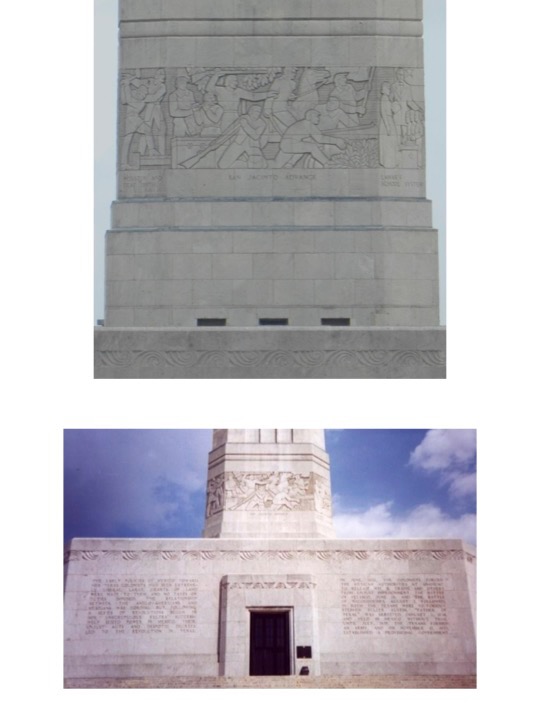
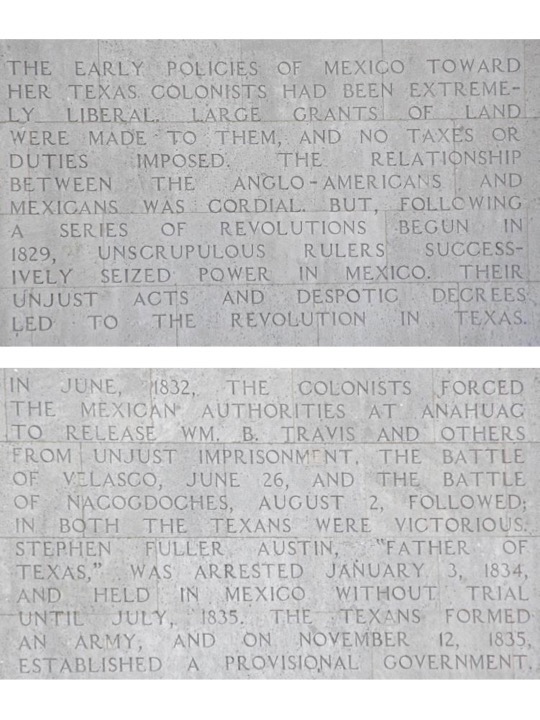
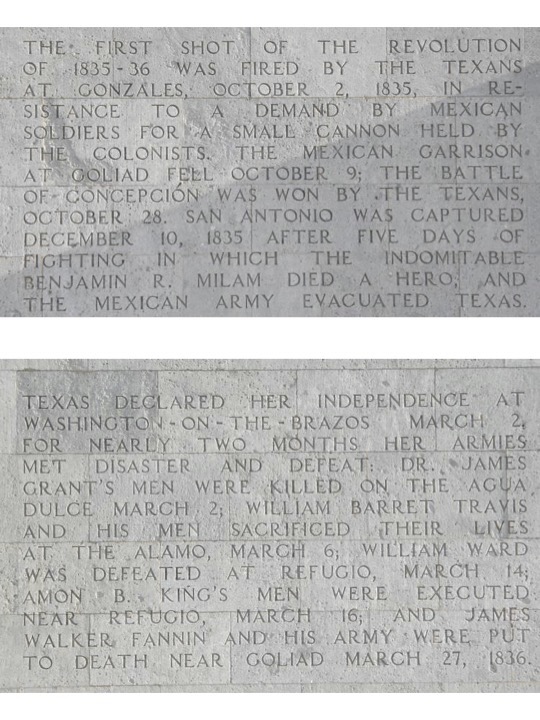
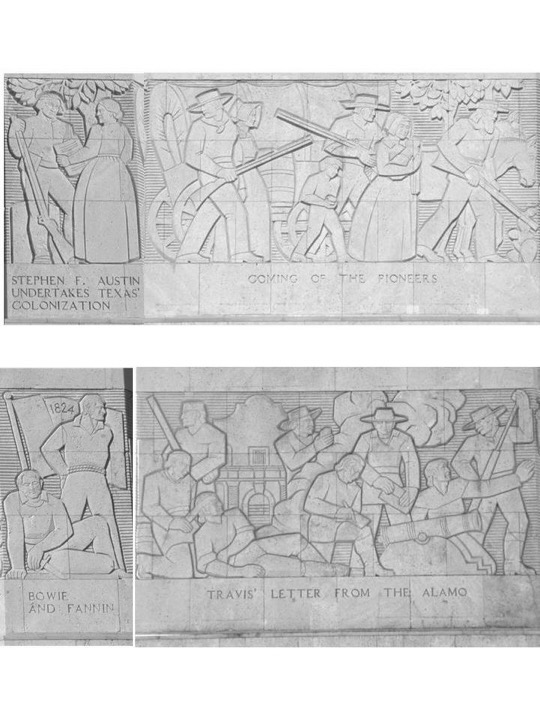
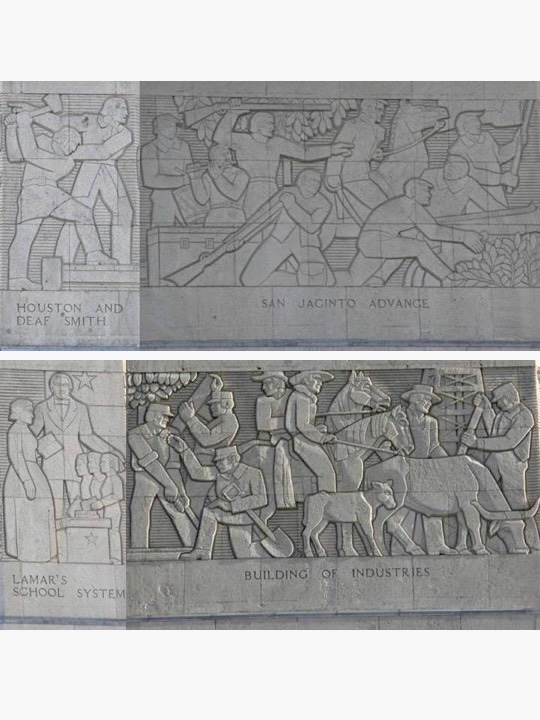
Carvings on the San Jacinto Monument –
all photos below are courtesy of Barclay Gibson:
© 2026, all rights reserved.


typo, should be 1936
”For the next two years, events were timed to coincide with San Jacinto Day, April 21.Groundbreaking took place in 1836 and the cornerstone was was laid one year later”
LikeLiked by 1 person
Thanks.
LikeLike