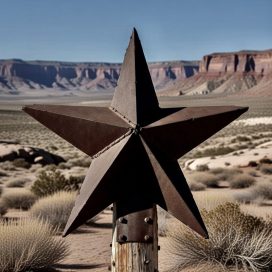
“Dallas” was a prime time CBS television series in the U. S. which ran for 14 seasons. It first aired in 1978 and ran its final episode in 1991. Internet Movie Database numbers the total episodes at 356. It was created by David Jacobs (1939 – 2023). The clipping below aired in various newspapers on or about April 2, 1978, timed to coordinate with the series premier, now called “Digger’s Daughter.”
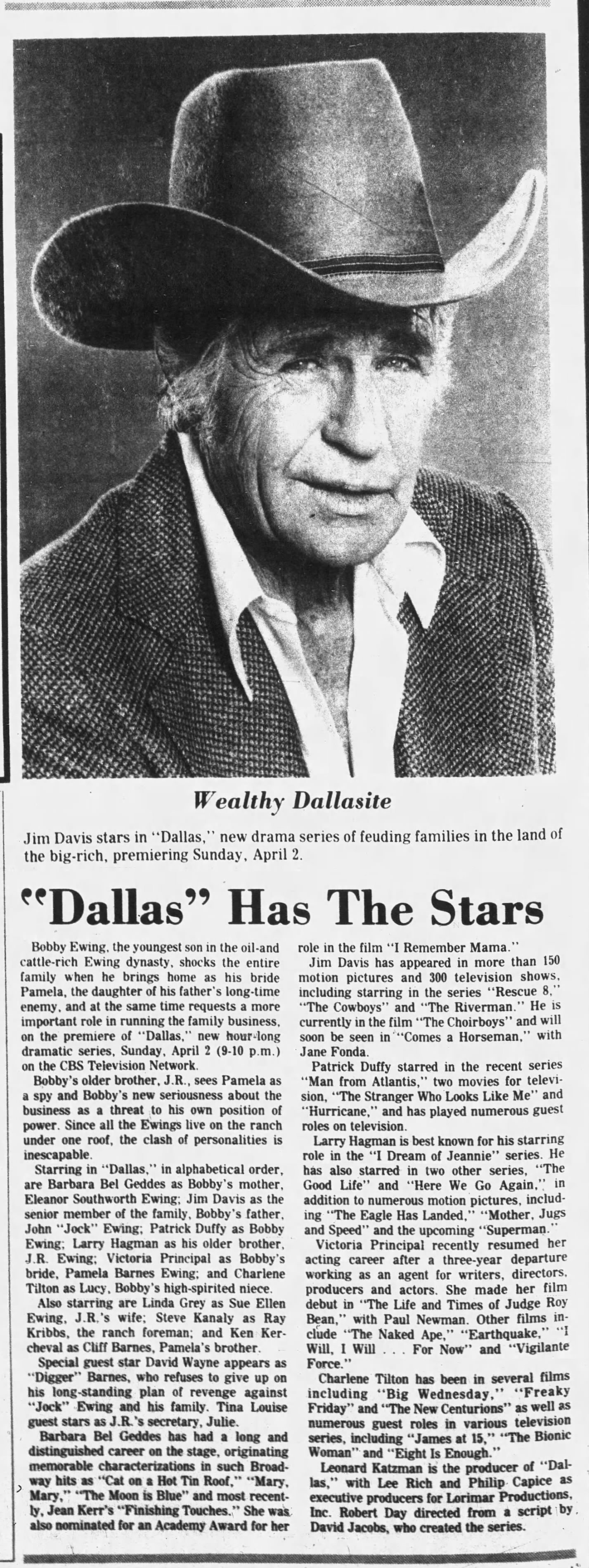
Without simply repeating the information presented in the clipping above, the show was basically created to be a prime time soap opera set in Dallas. Some of it was filmed locally and much of the rest was filmed in California. However, many “establishing” shots were taken in the Dallas-Fort Worth area. Part of the local appeal was for North Texas viewers to be able to spot familiar locations that appeared in passing shots.
David Arnold Jacobs was born in 1939 in Maryland. Early in his career, he worked as a professional illustrator and writer before gravitating to a possible career in screenwriting. An obituary for Mr. Jacobs tells the story of the origins of the successful series. In 1977, Mr. Jacobs had proposed a project to CBS involving a group of married couples living in Southern California. A CBS executive declined that premise and suggested that he instead consider a different concept. Jacobs thought about it and wrote a script about a wealthy Texas family named the Ewings. This time, the network liked the idea. A different CBS executive suggested the title “Dallas” for the project. Jacobs initially balked at that name for two reasons: he associated Dallas with the tragic presidential assassination that had occurred just 14 years earlier and that in his opinion, Houston was more of a town built on the petroleum business than was Dallas. Part of the interview comments included the hypothetical question about who might want to see a show called Houston, perhaps only intended as a humorous dig against the immensely successful and much larger southern metropolis. Whatever the reason, the name “Dallas” was chosen, the cast was assembled and filming soon began. The first season of the show began with five episodes organized as a miniseries.
The initial major cast members included Larry Hagman (eldest son J. R. Ewing), Patrick Duffy (youngest brother Bobby Ewing), Barbara Bel Geddes and Jim Davis (the senior Ewings, Miss Ellie and Jock), Linda Gray (Sue Ellen Ewing, wife of J. R.), Victoria Principal (Pamela Barnes Ewing, wife of Bobby). Other supporting characters were David Wayne/Keenan Wynn as Pamela’s grandfather (Digger Barnes), David Ackroyd/Ted Shackelford (middle son Gary Ewing), Charlene Tilton (Gary’s daughter Lucy), Ken Kercheval (Cliff Barnes, son of Digger and father of Pamela), Steve Kanaly (ranch foreman Ray Krebbs).
The fictional setting was Dallas, although not always downtown. The interiors and exteriors of residences, buildings and other locations were shown. The Ewings owned a ranch called Southfork which name was supposedly derived from Bel Geddes’ character’s maiden name. The ranch was located in the fictional county of Braddock. Several different ranches were used for various elements of Southfork. The North Texas location used for the exterior shots of Southfork became a tourist attraction and special event venue.
There were numerous plots and subplots in the series, but the basic continuing stories involved the long standing grudges/rivalries between the Barnes and Ewing families, supposedly dating back to something underhanded which occurred between the patriarchs of the two families, Jock and Digger. J. R.’s conniving schemes, constantly changing liaisons, crises, affairs, attempted business takeovers and and conflicts added to the drama.
The Ewings were portrayed as successful oil company owners and cattle ranchers. J. R. was the mastermind of his generation, willing to do anything to remain in control. Bobby was portrayed as the more moral sibling. Although he only appears to have written 6 episodes, Mr. Jacobs is noted as being a contributing writer for the first three seasons before having moved on to other projects. In something relatively new to series such as this, the 1980 season ended with a “cliffhanger” called “Who Shot J. R.?” Newspapers carried headlines to that effect, like the one below.

By then, the series had firmly caught on. This particular episode drew an estimated 350 million viewers which made it one of the most watched television episodes in history at that time. Print and other media capitalized on the event and outlets ran contests as to who was responsible for the attack. Some entities ran contests where viewers could put forth names of who they thought had done the deed. Craftily, the actual perpetrator was not identified until several episodes into the next season.
In terms of appearances, Hagman made some appearance in all episodes, Kercheval in about a dozen less, Duffy over 90%, Bel Geddes and Gray about 85% with all others appearing in fewer. Jim Davis’s Jock Ewing character appeared in just under 80 episodes due to his actual death in 1981. None of the other actors portraying main characters passed away during the tenure of the series, except for Donna Reed who had appeared in several episodes as Miss Ellie while Bel Geddes was sidelined for health reasons. Davis’ character was written out of the series and replaced by a completely new character named Clayton Farlow, played by veteran actor Howard Keel. The Farlow character took the place of the Jock Ewing character and appeared in about all the rest of the episodes. There were other character deaths written into the scripts. No spoiler here, but there is at least one more “situation” written for a main character.
The series became one of the most highly ranked on television during its tenure and popularized the genre. It aired in other countries and it would not have been unusual for American tourists to be asked by a foreign resident, “Do you know the famous J. R.?”
There was at least one spinoff called “Knott’s Landing” also created by Jacobs with a plot line that more closely resembled the original concept that he had presented to CBS before “Dallas.” It was connected the slightly earlier series by characters named Valene and Gary Ewing. Though it might be expected to sound somewhat “softer” in appeal, it ran for 14 seasons and a few more episodes than “Dallas.” There was one television sequel of Dallas that ran for three seasons starting in 2011.
“Dallas” was a phenomenon for its day. Since then, its longevity has been dwarfed by other long running dramatic series, such as the “Law and Order” franchise, but it was unique for its time. The series can still be found on streaming services.
© 2026, all rights reserved.
 Texas History Notebook