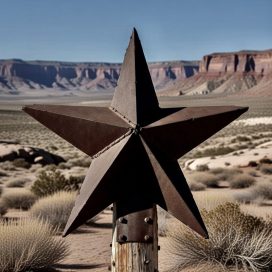
Buffalo Hump was a formidable Comanche war chief, thought to have been born around 1790. He lived until around 1870 and was one of the most influential Comanche leaders during his lifetime. His native name was Pachanaquarship and he was a respected leader among the Comanche tribe almost his entire adult life. His band were called the Penetekas which is roughly translated “honey eaters” and though they ranged widely in Texas, they spent a considerable amount of time in the general area that is now Abilene.
Tag: texas
Chepita Rodriguez
Josefa “Chepita” Rodriguez ran an inn on the old Cotton Road between Refugio and Aransas Pass around the time of the Civil War. Sometimes her name is spelled Chapita or Chipita, but Chepita appears to be the most common spelling. Her story began when John Savage, a cotton dealer and horse trader, was found dead, his body wrapped in burlap in the Aransas River near San Patricio.
The Many Lives of the Texas Clipper
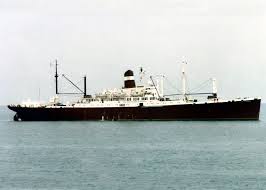
(Image credit: Navsource.com)
The ship last known as the Texas Clipper began her life as a Windsor Class Attack Transport. One of a class of seven ships, her hull was laid down March 2, 1944 in Sparrows Point, MD and she was launched September 12, 1944 for the United States Maritime Commission. The United States was three years into World War II. The Maritime Commision was a government agency created in 1936 to see to the creation of 500 merchant cargo ships to replace the aging World War I era fleet that made up the Merchant Marine. It offered a subsidy system to support some of the building costs. She was transferred to the United States Navy on December 16, 1944 and commissioned the USS Queens (APA-103) and went on to serve eighteen months in World War II, mostly for service in the Far East. She was not named for royalty, but rather the burrough of New York by the same name.
Buffalo Soldiers in Texas
The concept of all-black regiments had originated during the Civil War when northern states organized regiments of free blacks from the north and former slaves from the south. This concept was met with resistance in the north, which resistance is generally accepted to have been racially oriented in nature. However, by 1863 the U. S. Colored Volunteers had been organized into a cavalry regiment, an artillery regiment and almost two dozen infantry regiments. It is estimated that about one out of ten Union soldiers serving in the American Civil War were black.
Fort Concho
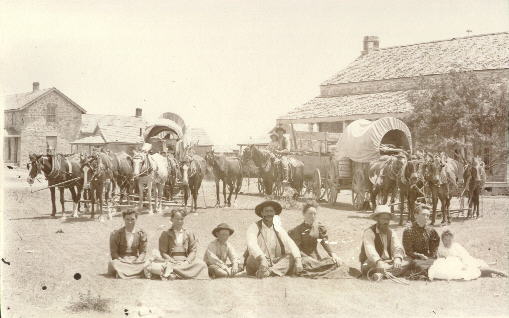
(Image credit: Fort Concho National Historical Landmark)
Fort Concho was one of the later forts established in the frontier system, opened in 1867 after the Civil War. It took its name from the nearby branches of the Concho River, the water system that was a critical resource in the area. It was positioned as a replacement for Fort Chadbourne that was located about 45 miles to the north northeast. Fort Chadbourne’s water supply had failed prior to the Civil War.
 Texas History Notebook