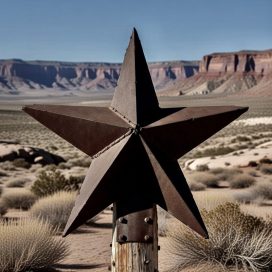
Mobeetie is generally considered to be the first town to arise and also remain in the Panhandle of Texas. It now is located in Wheeler County. Its origin dates back to the mid 1870s when trading in buffalo hides was economically profitable. Trails were established where traders from northern states including Kansas would interact with buffalo hunters. The settlement that sprang up became known as Hide Town or Hidetown.
Continue reading Mobeetie, TexasTag: towns
Impeachment of Mirabeau B. Lamar
The list below shows the elected presidents and vice presidents of the Republic of Texas during its existence:
| President | Vice President |
| David G. Burnet (Interim) Mar. 16, 1836 – Oct. 22, 1836 | Lorenzo de Zavala Mar. 16, 1836 – Oct. 17, 1836 |
| Sam Houston Oct. 22, 1836 – Dec. 10, 1838 | Mirabeau B. Lamar Oct. 22, 1836 – Dec. 10, 1838 |
| Mirabeau B. Lamar Dec. 10, 1838 – Dec. 13, 1841 | David G. Burnet Dec. 10, 1838 – Dec. 13, 1841 |
| Sam Houston Dec. 13, 1841 – Dec. 9, 1844 | Edward Burleson Dec. 13, 1841 – Dec. 9, 1844 |
| Anson Jones Dec. 9, 1844 – Feb. 19, 1846 | Kenneth Anderson Dec. 9, 1844 – July 3, 1845 |
Byrd Lockhart
Byrd Lockhart (1782-1839) is the namesake for Lockhart, Texas. He was born to Byrd (Sr.) (1750 – about 1813) and Sarah Williamson Lockhart (1763-1831).
Continue reading Byrd LockhartGay Hill, Texas
Though perhaps not as familiar a name as either Independence or Washington, there is a great deal of Texas history that is connected to the former residents of this small community. Gay Hill was named for Thomas Gay and William Carroll Jackson Hill. Gay and Hill were said to have been store owners in this Washington County settlement, though some accounts say that only Hill owned the store. The settlement was originally known as Chriesman Settlement after Horatio Chriesman (1797-1878).
Continue reading Gay Hill, TexasWashington-on-the-Brazos
On April 29, 1900, the Houston Post carried an article commemorating an address in Brenham given by the Hon. Harry Haynes, formerly of the state legislature serving Washington County the previous San Jacinto Day. Haynes recounted some of the early history of Washington County. In it, he said that on June 17, 1819, a force of 30 men under General James Long left Natchez, Mississippi for the area to the west that was then under the control of Spain. By the time they arrived at Nacogdoches, they numbered 300 men. Long split the forces to explore both the Brazos and Trinity Rivers and establish fortifications. Along the way some of the troops encountered Spanish or Mexican troops, dispersed and returned to Louisiana. Among those who remained, some of them serving under a Captain James Walker came to a place on the Brazos which Walker initially called La Bahia. Captain John W. Hall had also passed through the area several years earlier and had been attracted to it but there was little or no settlement there by Anglos until the early 1820s.
Continue reading Washington-on-the-Brazos Texas History Notebook