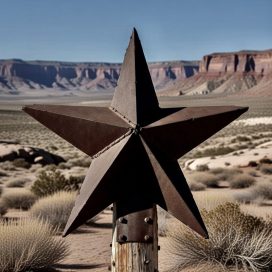
Fort Belknap was founded in the summer of 1851 by Brig. Gen William Belknap, then commander of the Department of Texas, to provide support for the settlers against the Comanche and Kiowa tribes. It also served to protect traditionally friendly tribes like the Tonkowa against attacks from settlers and other area tribes. Belknap was also a waypoint on the Butterfield Overland Stage line that carried the United States Mail for a few years. It was the northern outpost in a string of forts established from the Rio Grande to the south to the Red River to the north. Located in Young County, it served the area for about 8 years.
Tag: history
Mirabeau B. Lamar
Mirabeau Buonaparte Lamar was the second president of the Republic of Texas. He was born in Georgia in 1798 to John Samuel III and Rebecca Lamar. One of the youngest of eight children, Lamar was self educated, having been accepted to Princeton University, though he declined.
Kate Ross Padgitt and Steamboats on the Brazos
Kate Ross Padgett was born January 6, 1851 and was the first white child born in Waco. Her parents were Shapley Prince and Catherine Fulkerson Ross and they lived in a log cabin built near the Brazos River. Her older brother was Lawrence Sullivan (Sul) Ross who was a young child when the family moved to Texas. The exact location of the home is thought to be on the west side of the Brazos near downtown Waco, near the intersection of what was then Bridge Street and First Street, roughly where the Waco Suspension Bridge meets the river today. There was a natural spring nearby. The cabin was later replaced by a hotel, the first hotel in Waco, when the Ross family moved to a home near 12th and Dutton streets.
Continue reading Kate Ross Padgitt and Steamboats on the Brazos
Bill Pickett
Bill Pickett was born to Thomas Jefferson and Mary Gilbert Pickett in Jenks-Branch, Williamson County, Texas in 1870, one of 13 children. His heritage was African-American and Cherokee. He is credited for having invented the method of steer wrestling commonly called “bulldogging.” For this, his showmanship and his other skills he became the first person of African-American descent to be inducted into the Rodeo Hall of Fame of the National Cowboy and Western Heritage Museum in Oklahoma City, among his other honors.
Harry McArdle, Artist
Henry Arthur “Harry” McArdle was an American artist who painted historical scenes of particular interest to Texans. Since two of his works now hang in the Texas Capitol Building, some have probably seen examples of his work without knowing the name of the artist.

