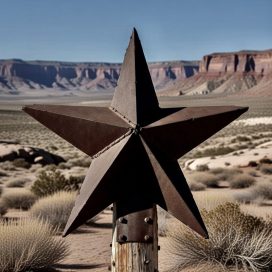
Fort Stockton was originally an adobe fort built in 1859 by the United States Army as a means of protecting travelers, freighters and the mail service. It was located near what was known as Comanche Springs, the source of Comanche Creek. It served as a way point on the Old San Antonio Road, the Butterfield Overland Stage route and the Comanche Trail to Chihuahua, Mexico.
Tag: history
The Newton Boys
The Newton Boys were a gang of brothers from Uvalde, Texas operating mostly in the 1920s. Probably many people had never heard of them until the 1998 film by that name. The Newtons were Willis, Joe, Jess and Dock (Willis’ twin brother whose birth name was Wylie). In total, they robbed six trains and over 80 banks. They were active for about four years before they were apprehended. All spent some of their lives in prison and after being released, most returned to Uvalde, living there into their senior years.
Texas Prison Rodeo
The Texas Prison Rodeo (earlier known as the Huntsville Prison Rodeo) was an event that Texans looked forward to for many years. It began in 1931 when Marshall Lee Simmons, then serving as general manager of the Texas Prison System, conceived of it as a means for the prisoners to have recreation and as entertainment for the prison employees and their families but it quickly grew to a ticketed event that would play to a full grandstand of 14,000 to 15,000 people per performance. The event covered costs and raised money for an inmate treatment, education and recreation fund for the prisoners. Eventually the performances were held each Sunday in October and would total as many as 100,000 attendees per season. In its later years, it would not be unusual for the prison rodeo to earn $450,000 in a season for the inmate fund.
Ima Hogg
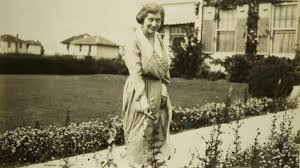
(Image credit: Houston Museum of Fine Arts)
One of the more unique and recognizable names in Texas was Miss Ima Hogg. Her father was James Stephen Hogg, the first native born governor of Texas, who served as governor from 1891 to 1895. James and Sarah Ann Stinson Hogg had three sons and Imogene, their only daughter. It is not known for certain who Imogene was named for, but the story is told that James had a brother named Thomas Elisha Hogg, a Confederate Captain, who had written a Civil War poem “The Fate of Marvin.” The poem was about a Southern girl named Ima who had cared for a Union soldier. There are some stories floating around that she had a sister named Ura, but according to published genealogy records, Ima was the only daughter of Jim Hogg and Sarah Stinson Hogg.
The Goodnight Ranch
Goodnight is a name that calls to mind cattle drives from North Texas to Wyoming or Montana and also the start of ranching in the Panhandle. Charles Foxwing Goodnight, Jr. was born in Illinois, not too far north of St. Louis, Missouri to farmers Charles and Charlotte Collier Goodnight in 1836. His father died five years after this and his mother married Hiram Henry Daugherty, a farmer who lived nearby. A few years later in 1845, the family headed for Texas, settling between what is now Milam County between College Station to the east and Austin to the west. Charles did not receive much formal schooling and began working as a cowboy to help the family get by. His first stepfather Daughterty also died not long after arriving in Texas. His mother then married a minister by the name of Adam Sheek in 1853. Goodnight and a step brother, John Wesley Sheek, began a ranching operation and around 1857 they relocated it further up the Brazos to what is now Palo Pinto County. Once they got settled, they brought the family with them.

