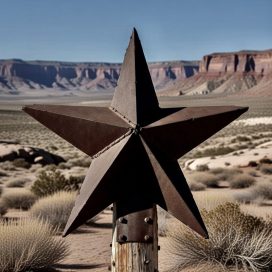
Mobeetie is generally considered to be the first town to arise and also remain in the Panhandle of Texas. It now is located in Wheeler County. Its origin dates back to the mid 1870s when trading in buffalo hides was economically profitable. Trails were established where traders from northern states including Kansas would interact with buffalo hunters. The settlement that sprang up became known as Hide Town or Hidetown.
Continue reading Mobeetie, TexasTag: frontier times
Byrd Lockhart
Byrd Lockhart (1782-1839) is the namesake for Lockhart, Texas. He was born to Byrd (Sr.) (1750 – about 1813) and Sarah Williamson Lockhart (1763-1831).
Continue reading Byrd LockhartBritt Johnson
The story of Britton “Britt” Johnson is remarkable for many reasons. He was known to have been brave, a loving husband and father and a capable businessman. He was born into slavery although he was a freedman for at least several years before his death. Possibly related to the fact that he was at one time a slave and that his family line seems to have ended without any known descendants, detailed genealogy information about Britt Johnson and his family is still unknown.
Continue reading Britt JohnsonZ. N. Morrell
Zacharius Nehemiah Morrell is generally given to be his full name, though his exact name and spelling may vary in accounts. Often only his initials Z. N. are used. He was born on January 17, 1803 in South Carolina to John and Darcus Morrell. In his early years, he lived in Tennessee before coming to Texas. He became a Christian as a youth and though he was not formally educated, was an effective minister and a good writer. He was able to chronicle his own life and experiences on the Texas frontier. Though he was a minister, his experiences were similar to those of any other early settler.
Continue reading Z. N. MorrellElm Creek Massacre
October 13, 1864 was a key day in the lives of several north Texas families. In a valley known as Elm Creek, located roughly ten miles south of the town of Newcastle in the western part of Young County, several hundred Kiowa and Comanche tribesmen raided several homes. The settlers (some black and some white) had been living there a while and their homes were scattered along Elm Creek.
Continue reading Elm Creek Massacre
