Perhaps less known than others of his time, botanist and naturalist Ferdinand Jakob Lindheimer is called the Father of Texas Botany. Lindheimer was born May 21, 1801 in Frankfurt, Germany. He received his early education in Germany and was teaching there before he was 30 years old. According to accounts, he held political views that were controversial and unpopular for the day in Germany and around 1833, he decided to leave Germany. At that time the prevailing form of government was described as being a loose union of 39 states, dominated by Austria. It is presumed that Lindheimer held to a minority opinion favoring liberalism and democracy. Lindheimer relocated to the United States, living for a while in Illinois and for a year and several months in Mexico with other German expatriates until around 1836. About this time, articles note, he served in the Texas army. Some say that he fought in the Battle of San Jacinto while others hold that he joined soon after the battle.
Lindheimer settled in the area that would later become known as New Braunfels. The early settlement of German families in the New Braunfels area dates back to the an early group of German immigrants. In the 1840s, 200 families, around 700 individuals in all, boarded three ships at Bremen and sailed to Galveston under the leadership of a German, Prince Carl of Solms-Braunfels, who had acquired land, around 1,500 acres between the Guadalupe and Comal rivers, in the heart of the massive Fisher-Miller Grant,
Solms-Braunfels was quite an interesting person, and does not appear to have intended to permanently reside in Texas. The organization he headed. Adelsverein, had agreed to give each immigrant 10 acres of land in addition to the 160 or 320 acres they could be granted. He named the town site New Braunfels after a castle owned by his family on the Labo River near Hesse, Germany. It was the first German town in western Texas and was said to have been founded on Good Friday, March 21, 1845. Lindheimer, already known as a botanist, was a part of Adelsverein, or Mainzer Adelsverein, created to establish a colony that was to serve as “new Germany” in Texas. The organization was owned by several dozen individuals, many of whom had royal titles. It ceased its Texas funding after about ten years, but the settlement at New Braunfels had taken hold. There were challenges to the new residents, since the area was located in wilderness. Prince Solms built a fort on a high point suggested by Lindheimer and called it Sophienberg, a name that is still evident in the area. Sophienberg, by the way, was named for his future wife, a widow and herself a German princess. The Prince had invited her to come to Texas, but she declined for various reasons. Also, Prince Solms had been on temporary leave from military obligations. Once he returned to Germany, they married in 1845 and over time had five children. New Braunfels could have later changed its name. A newspaper article from the December 14, 1877 issue of Galveston Daily News noted that there was once a failed movement to rename the town from New Braunfels to Comal, a Spanish word meaning flat dish or basin, after the surrounding terrain and the short river that is today within the city limits of New Braunfels.
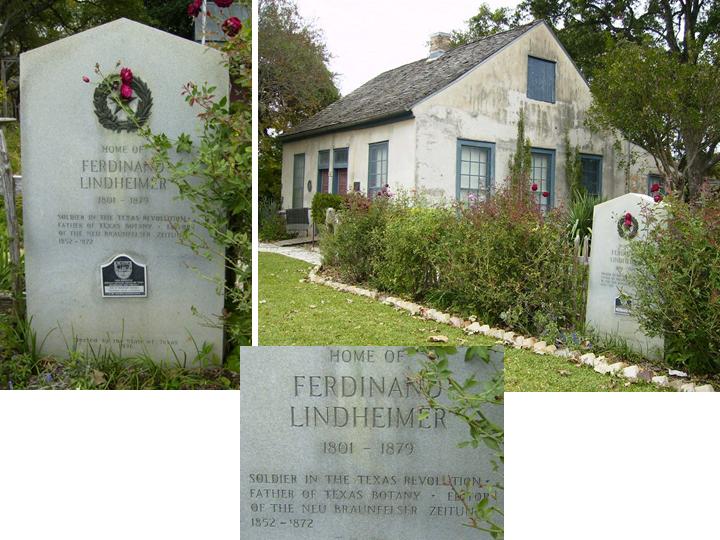
Lindheimer had been living in the New Braunfels area before the settlement. He remained there, using it as home base for his activities and research which took him to many other locations. It was constructed of hand-hewn cedar and adobe brick. He maintained a bonatical garden on the grounds. Lindheimer’s grant was on the banks of the Comal River and his 1856 residence still stands.
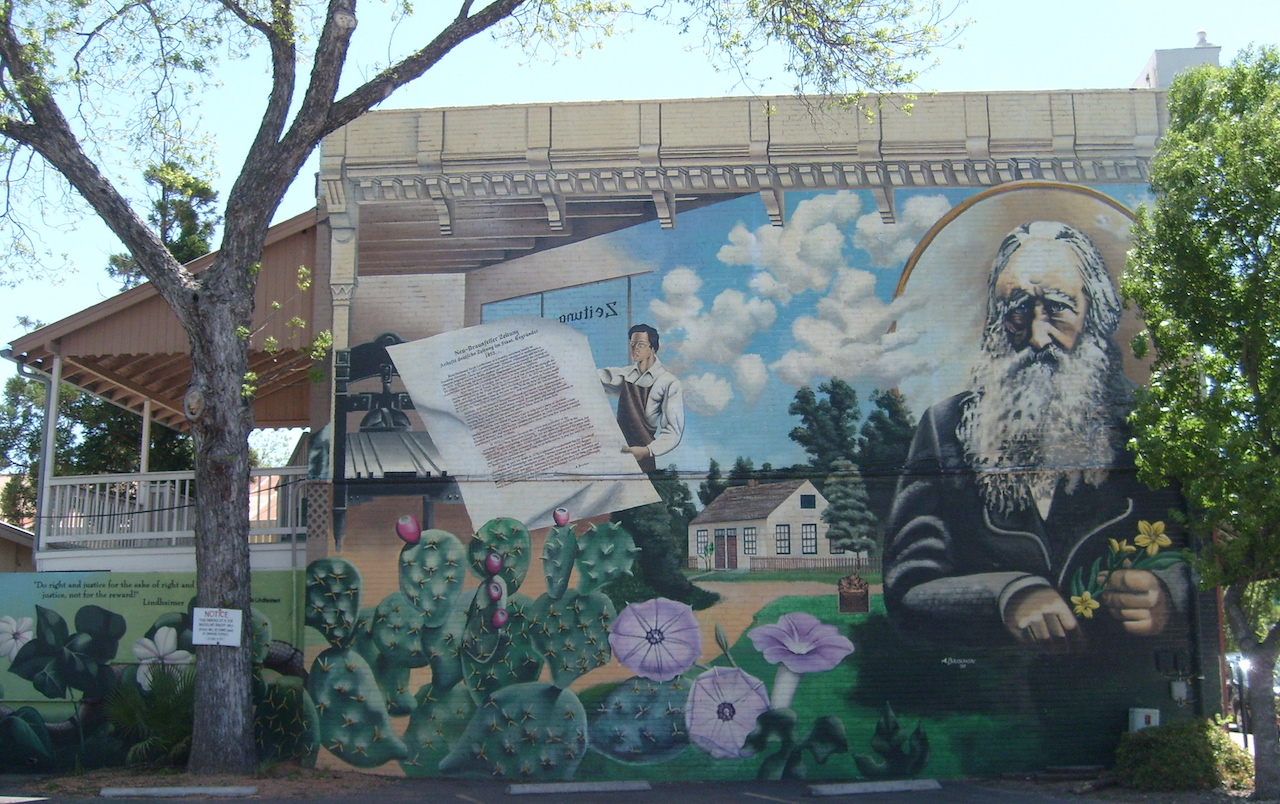
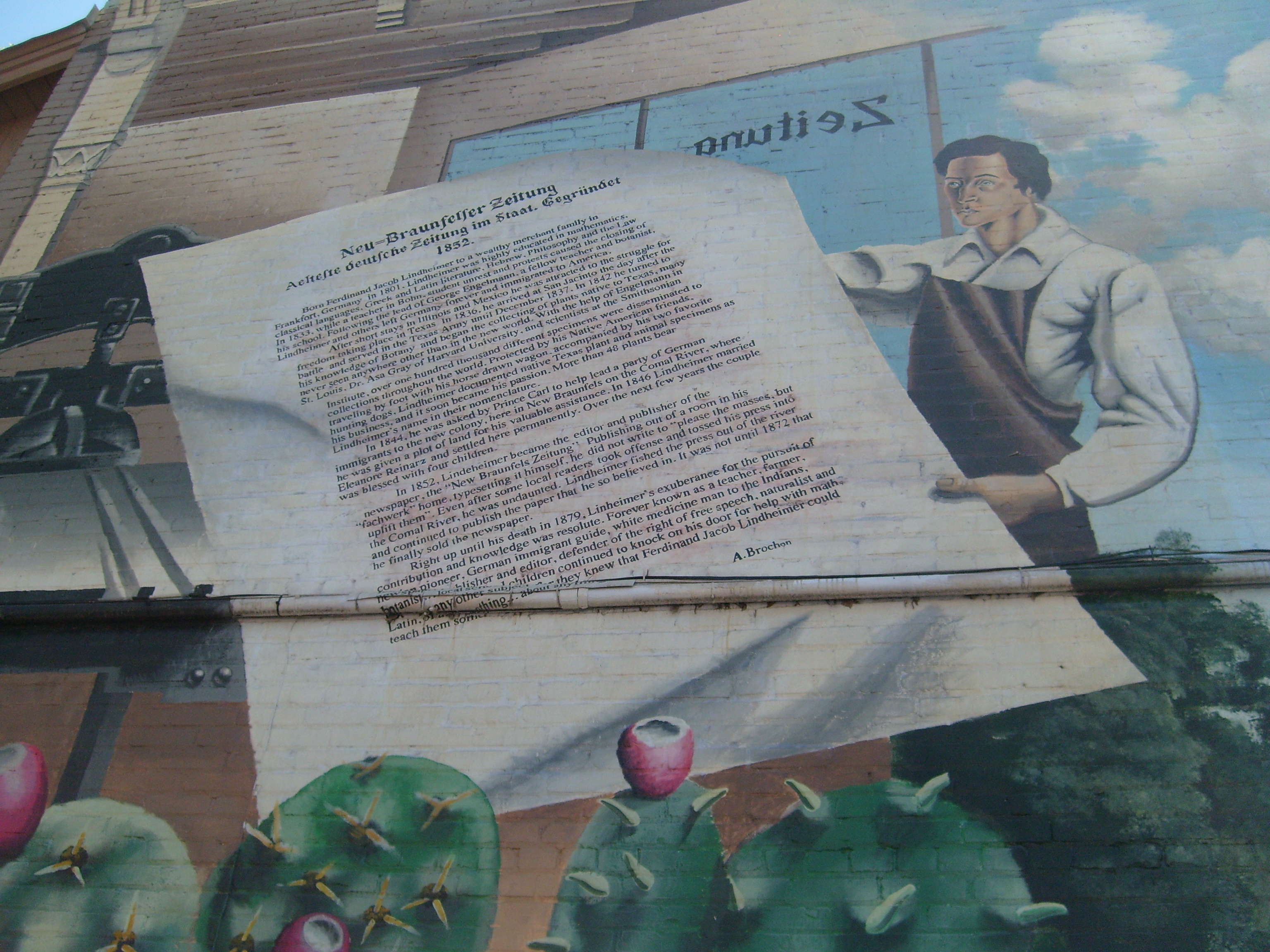
Lindheimer is likely better known for his scientific activities but he founded the first German newspaper in Texas called Neu Braunfelser Zeitung and served as its first editor. There was apparently a print shop in his home. He would remain associated with the publication for the better part of the next 20 years. This carried him through the entire period of the Civil War. A few years before the Texas centennial, an article in the San Antonio Express-News noted how the war had affected the German communities of Texas. Some men of age volunteered for the Confederacy while others felt they owed their allegiance to the Union. Lindheimer sided with the Confederacy. He continued to publish his newspaper throughout the conflict, but faced opposition to his personal views which were said to be founded on regional loyalties and in favor of states’ rights. Other comments about his editorial orientation label him as anticlerical which would have doubtless further alienated others of the German community. The Express-News article added that at one point that his printing press and all of his type was dumped in the Comal River by his political opponents. Lindheimer continued his association with the periodical until around 1872.
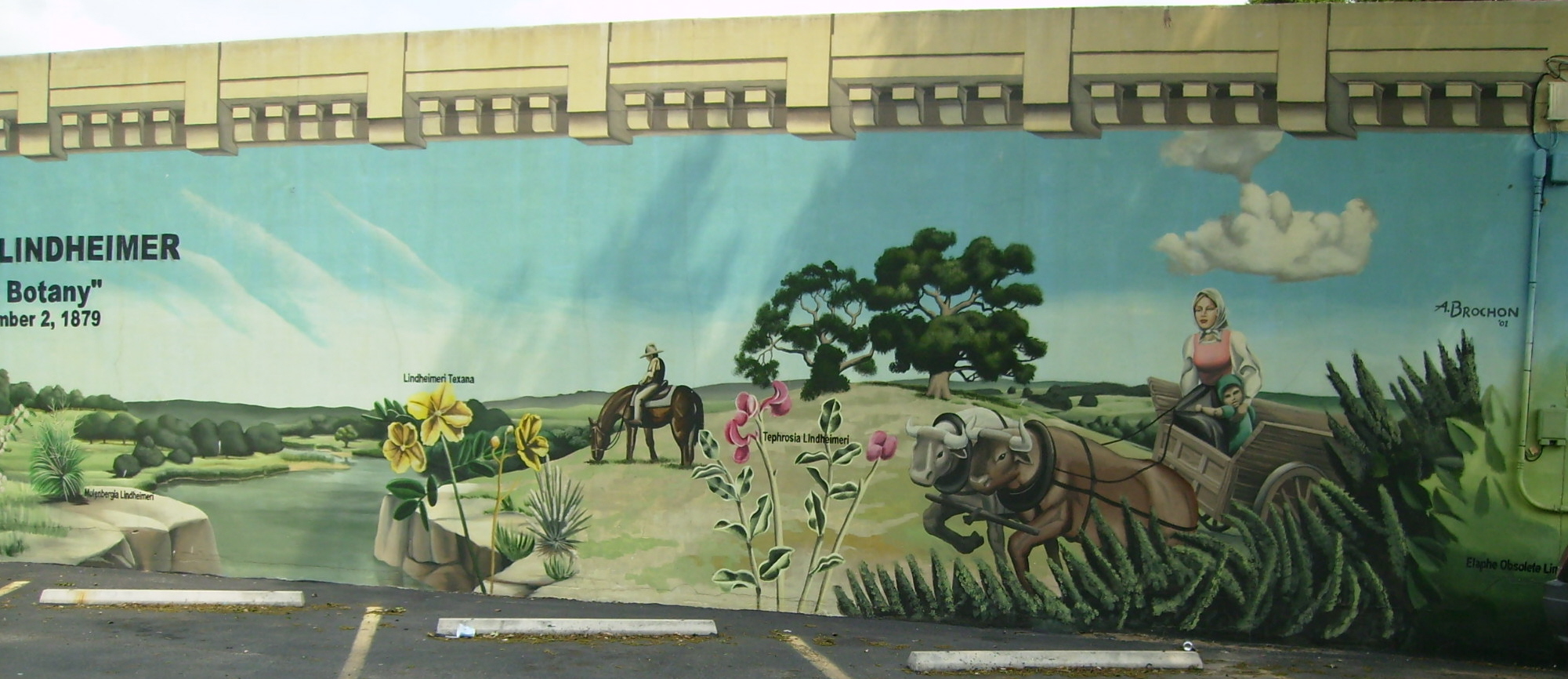
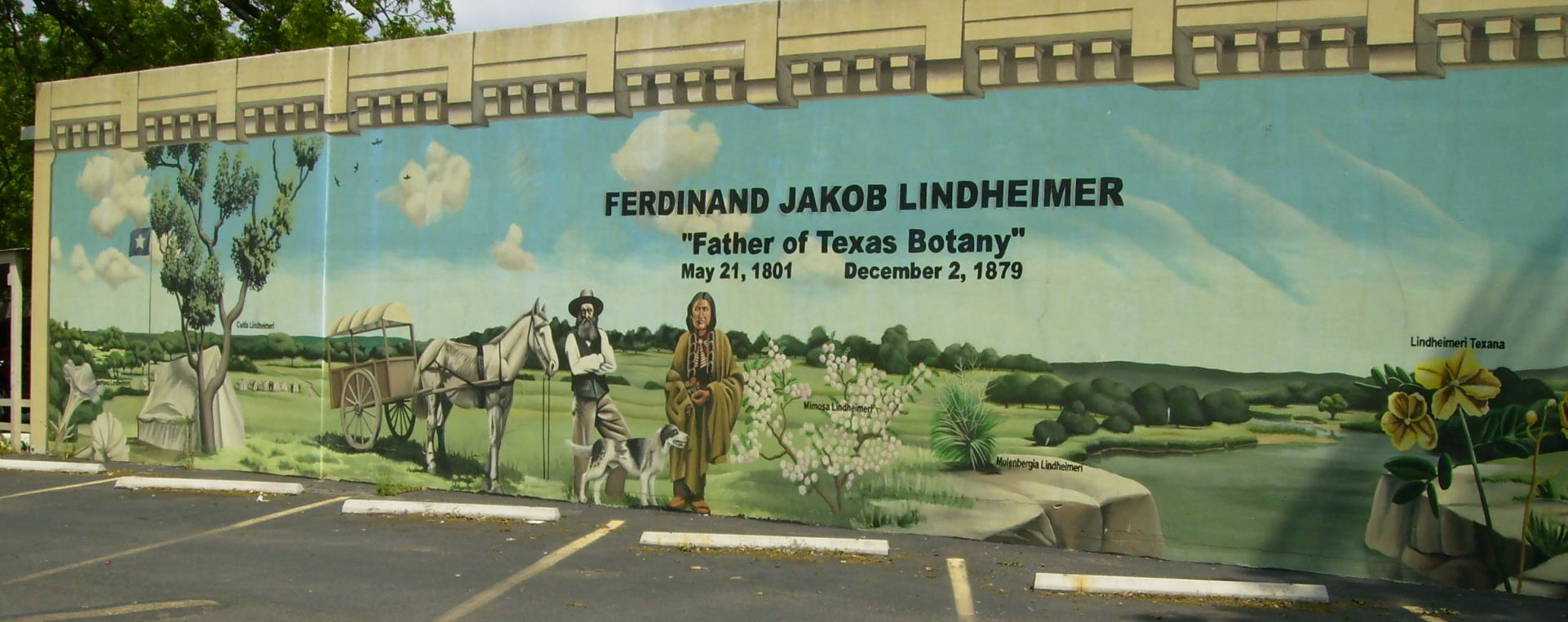
After leaving the newspaper, he had devoted himself to botany. The article continues and describes Lindheimer’s typical traveling equipment as being limited to a crude two-wheeled horse-drawn cart and that his collecting trips carried him to Columbus, San Felipe, Cat Springs, Industry, San Saba and Fredericksburg.
In 1845, Lindheimer had married a lady named Eleonore Reinarz from among the German settlers. She was around 16 years younger than Lindheimer. The began to raise a family of mostly daughters. Eleanor is said to have greatly assisted her husband in his research. Lindheimer’s name is now associated with 40 to 50 plants. Some of them are listed below:
- Oenothera lindheimeri (formerly Gaura lindheimeri) – Commonly called Lindheimer’s beeblossom, white gaura, pink gaura, butterfly gaura, or Indian feather. It is a perennial with wispy stems and white-to-pink flowers that attract pollinators and is native to Texas and Louisiana.
- Ipomoea lindheimeri – Lindheimer’s Morning-glory, Blue Mornging Glory
- Muhlenbergia lindheimeri – Lindheimer’s muhly (or big/blue muhly), an attractive ornamental bunchgrass native to Texas and northern Mexico.
- Lindheimera texana – Texas yellow star or Lindheimer’s star; the genus Lindheimera is one of the few directly named for him.
- Indigofera lindheimeriana – Lindheimer’s indigo.
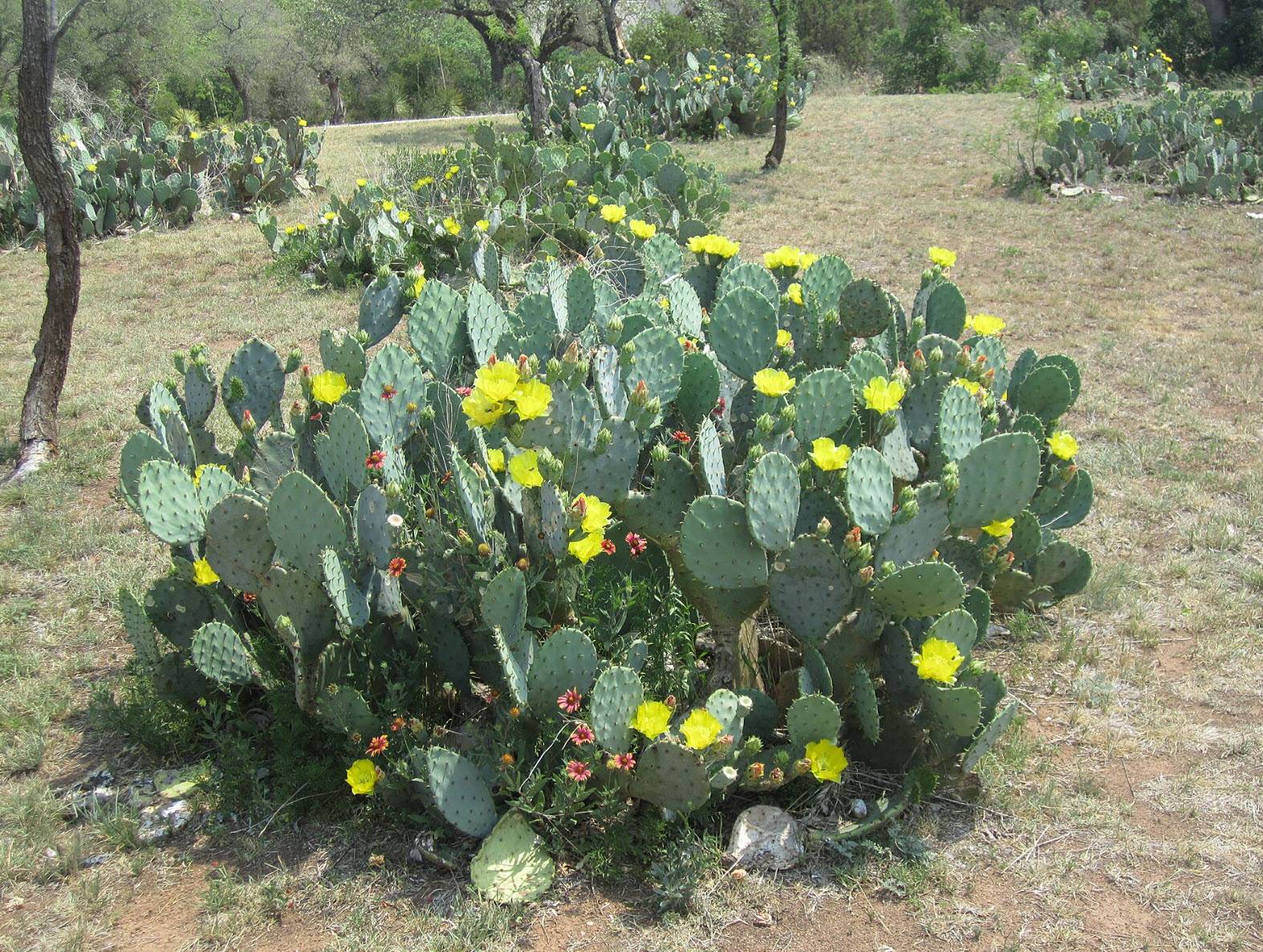
- Opuntia lindheimeri – Cow’s Tongue Prickly Pear, a type of prickly pear cactus.
- Others include Dichanthelium lindheimeri (Lindheimer’s panicgrass), Perityle lindheimeri (Lindheimer’s rockdaisy), Monarda lindheimeri (Lindheimer’s bee balm), Garrya ovata ssp. lindheimeri (Lindheimer’s silktassel), and Physaria lindheimeri.
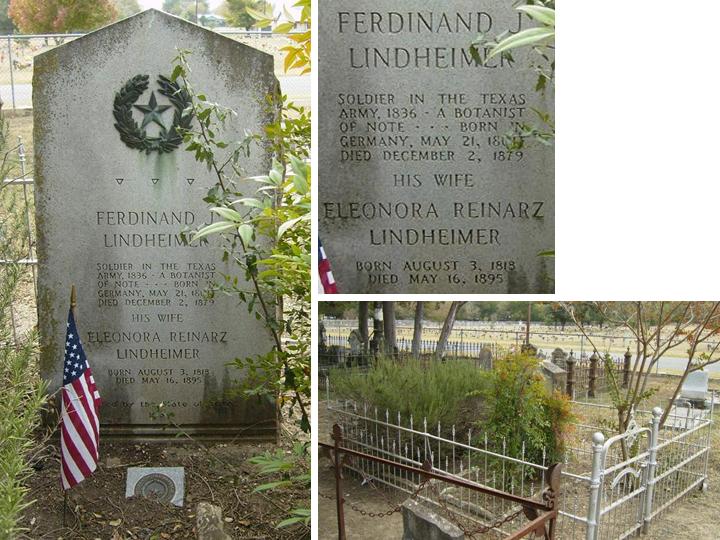
Lindheimer died in New Braunfels in 1879. His wife Eleanor survived him until her death in 1895. Both are buried in the Comal Cemetery in New Braunfels.
Their former residence on the Comal River is easily found and is now preserved as a museum by the New Braunfels Conservation Society. Over twenty institutions around the world house some of his collection, at locations that include museums and universities in Europe. It is estimated that in his lifetime, his collection of Texas plants numbered as many as 100,000 specimens.
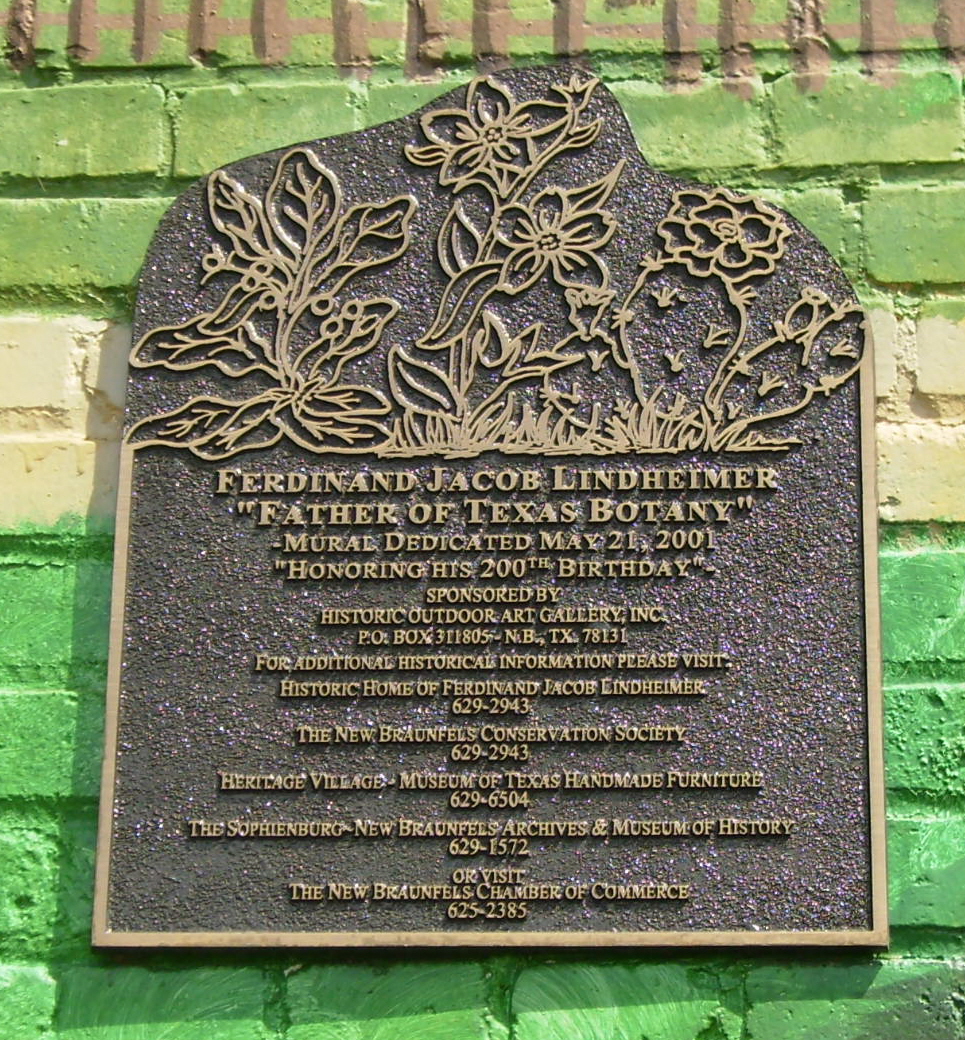
Photos pertaining to F. J. Lindheimer, courtesy of Sarah Reveley:
© 2026, all rights reserved.

