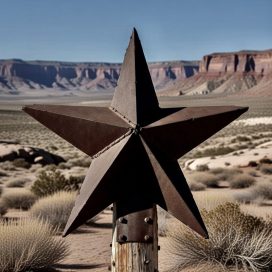
Junius W. Peak was one of the more charismatic individuals in Texas history. His family moved to Texas from Kentucky in 1855. The family was large, with many brothers and sisters. Jefferson and Martha Reser Peak bought 229 acres of farmland close to the small Dallas settlement. Peak would recall that his father Jefferson paid $110 for the land.
Category: biography
J. Riely Gordon, architect
James Riely Gordon was a practicing architect during what has been called the Golden Age of Texas Courthouses, the 1880s and 1890s. By then, almost all of the 254 Texas counties now in existence had been established. The Texas legislature allowed counties to issue bonds for courthouse construction and many counties did, leading to construction projects all over the state.

Pictured: Ellis County Courthouse in Waxahachie (2015)
Sherman, Texas
The town of Sherman is located in Grayson County. It was named for General Sidney Sherman (1805-1873) who during the battle of San Jacinto on April 21, 1836 is the person credited for shouting the battle cry “Remember the Alamo! Remember Goliad!” In 1846, the Texas legislature had created Grayson County out of Fannin County and designated Sherman as the new county seat. Sherman gained its first post office in 1847. It was fairly well established by 1850 and later became a stop on the Butterfield Overland Mail route.
Amon Giles Carter (1879-1955)
Amon G. Carter is likely a familiar name to many people who are from North Texas. He was born in a log cabin to William Henry and Josephine Ream Carter in Crafton, Texas on December 11, 1879. Amon’s mother died when he was still an infant. His father was a blacksmith and a farmer. Due to the family’s financial situation, Amon left school and began working by doing odd jobs, whatever work he could find in Bowie, Texas. In his teenage years, he continued to move around a bit until he finally settled in North Texas.
Doris Miller (1919-1943)
(Doris Miller poster in the World War II Museum in New Orleans, Louisiana)
Doris “Dorie” Miller was a true Texas hero. He was classified as a Navy Messman on December 7, 1941, serving on the USS West Virginia, a battleship. At the time, Messman was one of the few positions open to African American sailors. Miller was solidly built, carrying over 200 lb. on his 6’3” frame. He’d taken up boxing and was heavyweight champion of the West Virginia out of a crew of about 2,000. The West Virginia was on station in in Hawaii at Pearl Harbor. That morning, he woke at 0600, as was his custom. He served breakfast mess and was still below deck collecting soiled laundry when the first torpedo hit the West Virginia just before 0800. He heard and felt the explosion and immediately went to his battle station, an anti-aircraft gun near the heart of the ship.

